Imagine a scenario where a simple substitution error leads to a patient's medication failure. For some, this sounds like a nightmare; for pharmacists, it's a statistical reality. According to an ACPE compliance report, nearly 43% of all pharmacy-related malpractice claims involve errors linked to generic substitution or a misunderstanding of therapeutic equivalence. In a world where generic drugs make up about 90% of all prescriptions dispensed in the U.S., the stakes for staying current aren't just about keeping a license-they're about patient safety.
| Feature | Standard Requirement | Key Focus Area |
|---|---|---|
| Typical Credit Hours | 15-30 hours per 2 years | State-specific mandates |
| Accreditation Bodies | ACPE or State Board of Pharmacy | Regulatory compliance |
| Generic Focus | FDA Orange Book / ANDA | Therapeutic equivalence |
| New Standard (2025) | Biosimilars & REMS | Interchangeability |
What Actually Counts as Continuing Pharmacy Education?
When we talk about Continuing Pharmacy Education (CPE), we aren't just talking about reading a few articles. The Accreditation Council for Pharmacy Education (ACPE) defines it as structured activity designed to keep pharmacists and technicians competent. It's not about passive learning; it's about problem-solving and critical thinking that you can actually use at the pharmacy counter.
Most U.S. states require a specific number of hours for license renewal, usually between 15 and 30 hours every two years. For example, if you're practicing in Illinois, you're looking at 30 hours per cycle. But it's not just about the quantity of hours. You have to navigate different types of learning: knowledge-based (the basics), application-based (case studies), and certificate programs (deep dives with assessments). If you're managing licenses in multiple states, the complexity spikes, as you have to juggle different state-mandated topics like implicit bias or cultural competency training.
Navigating the Maze of Generic Drug Regulations
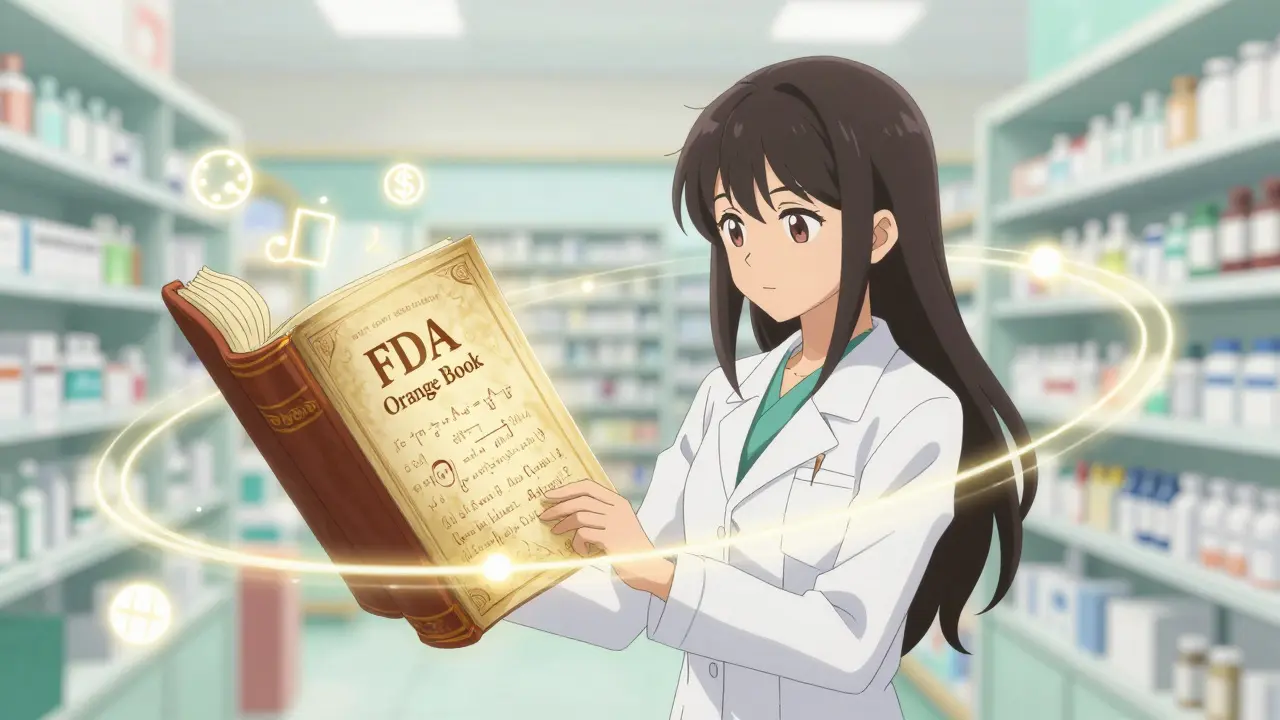
Staying current on generics is one of the fastest-moving parts of the job. To start, every pharmacist needs to be intimately familiar with the FDA Orange Book, which is the gold standard for therapeutic equivalence. With over 1,200 ratings updated monthly, relying on what you learned in pharmacy school a decade ago is a recipe for disaster.
You need to understand the Abbreviated New Drug Application (ANDA) process. For a generic to be approved, the Food and Drug Administration (FDA) requires it to be bioequivalent-meaning it must fall within 80-125% of the brand-name drug's pharmacokinetic parameters. If it doesn't hit those numbers, it's not a match. Then there's the legal side, like the CREATES Act, which was designed to stop brand-name manufacturers from blocking generic developers by refusing to provide samples. Understanding these legal hurdles helps you explain to patients why a certain generic might suddenly disappear or appear on the market.
The Biosimilar Challenge: Beyond Standard Generics
If you think standard generics are tricky, wait until you deal with Biosimilars. Unlike small-molecule generics, biosimilars are complex proteins. They aren't identical copies; they are