
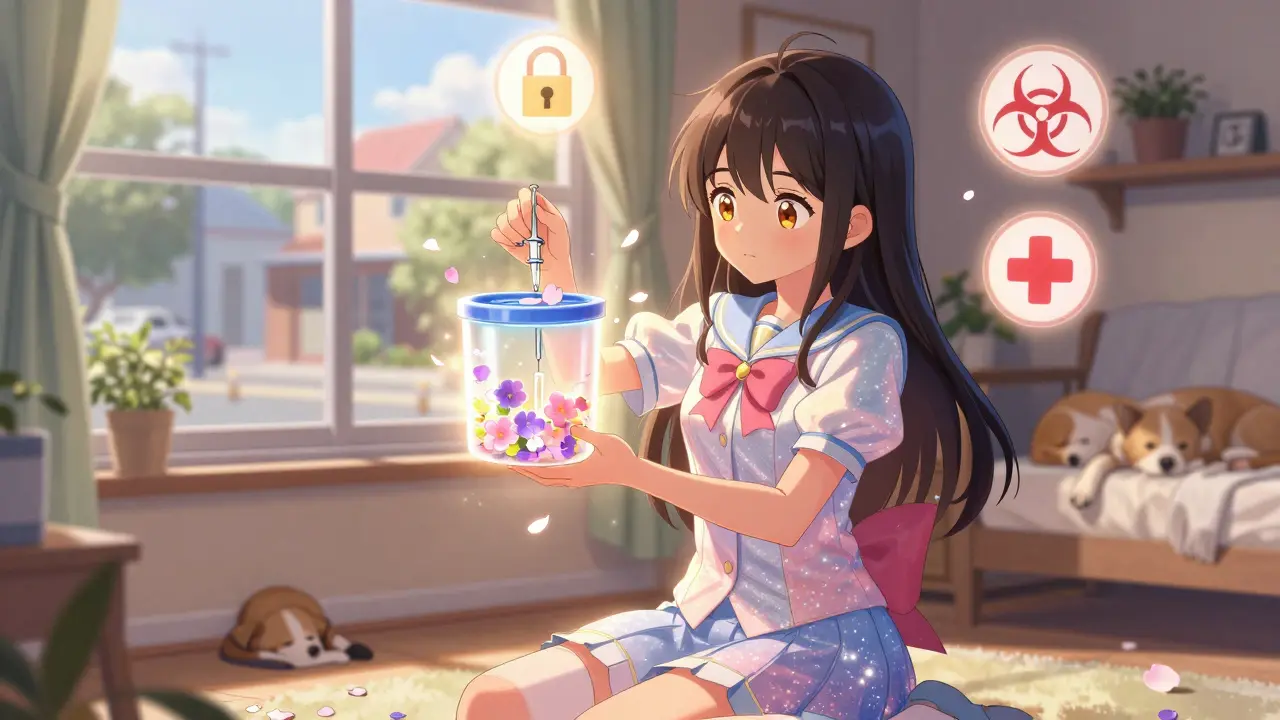
Every year, millions of people in Australia and around the world use injectable medications - insulin for diabetes, blood thinners, autoimmune treatments, or vaccines. But what happens after the needle is used? If you toss it in the trash, flush it down the toilet, or stick it in an old soda bottle, you’re not just being careless - you’re putting your family, trash workers, and even pets at risk. Needlestick injuries aren’t rare. They happen in homes, on sidewalks, in recycling bins, and sometimes even in hospitals. The good news? Safe disposal is simple, legal, and within reach.
What Counts as a Sharp?
A sharp isn’t just a needle. It includes any device that can cut or puncture skin after being used to deliver medication. That means:
- Needles (used with syringes)
- Syringes (even if the needle is removed)
- Lancets (for blood glucose testing)
- Auto-injectors (like EpiPens or insulin pens with attached needles)
- IV catheters with sharp ends
- Disposable insulin pens with fixed needles
Even if the needle looks clean, it’s still dangerous. Blood or medication residue can remain inside. And yes - you must treat every used sharp as if it’s contaminated.
Why Improper Disposal Is Dangerous
Imagine a trash collector pulling a bag from a bin and getting jabbed by a hidden needle. Or a child finding a syringe in the backyard. Or a pet chewing on one. These aren’t hypotheticals - they happen every day.
Needlestick injuries can spread serious infections:
- Hepatitis B - up to 30% chance of infection from one exposure
- Hepatitis C - about 2% chance
- HIV - 0.3% chance, but still life-altering
According to the CDC, over 385,000 needlestick injuries occur annually among healthcare workers. But the real number? It’s likely much higher. Most home incidents go unreported. That’s why safe disposal isn’t just about rules - it’s about protecting people you care about.
The Right Container: Not Just Any Jar
You can’t use a plastic bottle, a coffee can, or a yogurt container. They crack. They leak. They get punctured. The only safe option? An FDA-approved sharps container.
These aren’t fancy gadgets - they’re basic, sturdy, and designed to keep you safe. Here’s what makes them different:
- Thick, puncture-resistant plastic (at least 1mm thick)
- Tight-fitting, lockable lid that won’t pop open
- Biohazard symbol clearly marked
- Fill line at 3/4 full - never overfill
- Stable base so it doesn’t tip over
Common brands you’ll find in pharmacies: BD Redi-Sharp, Sharps Compliance, MedPro, and Stericycle. Prices range from $8 to $25 depending on size. A 1.5-gallon container lasts most home users 2-4 months.
Some people try to reuse old containers. Don’t. Even if it seems sturdy, it’s not tested or certified. A 2022 study found that facilities using homemade containers had 78% more needlestick injuries than those using proper sharps containers.
How to Use the Container Correctly
Using the container right is just as important as having one. Here’s how:
- Dispose immediately - Don’t leave needles on counters, in pockets, or under pillows. Put the sharp in the container right after use.
- Never recap - Trying to put the cap back on a needle is one of the top causes of injuries. If you must, use a one-handed technique or a cap device - never two hands.
- Don’t overfill - Stop when the contents reach the 3/4 line. If you can see the sharps through the fill window, it’s time to seal it.
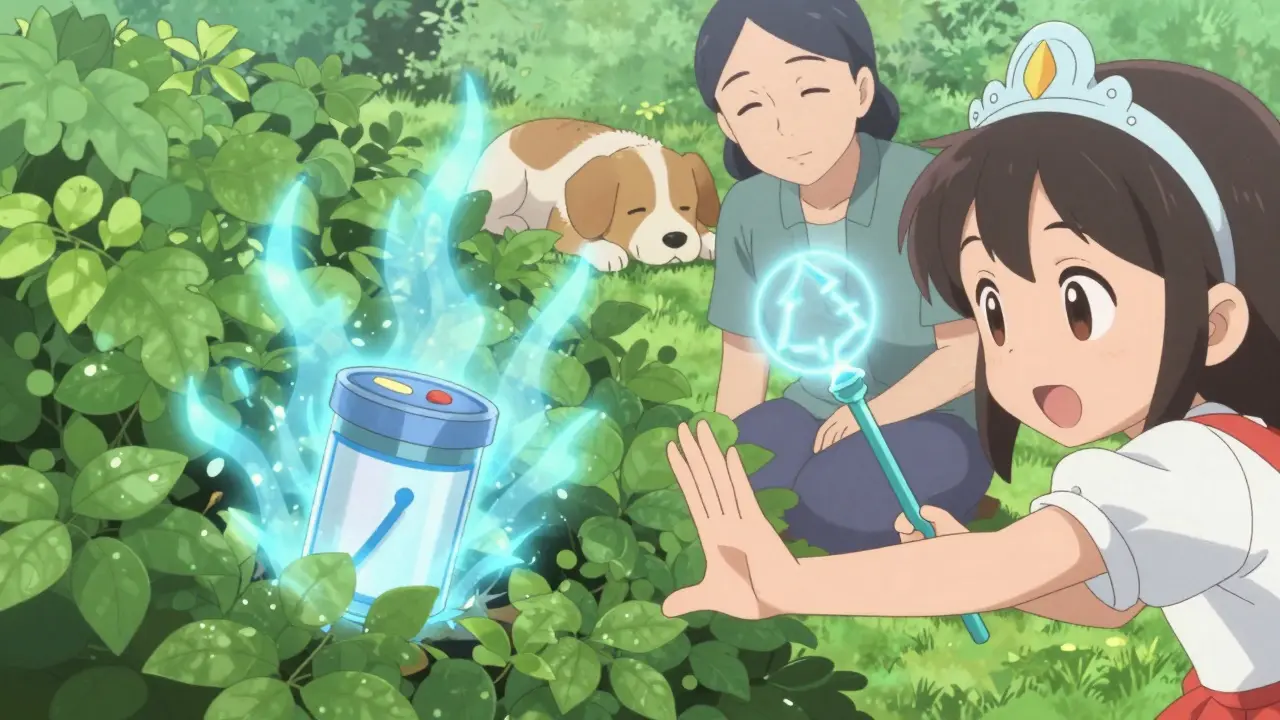
- Keep it upright - Store the container on a flat surface, away from kids and pets.
- Close the lid tightly - Most containers have a locking mechanism. Use it.
Once sealed, leave the container alone. Don’t try to open it again. Don’t crush it. Don’t remove needles. Just store it safely until disposal day.
Where to Dispose of Sharps in Australia
In Australia, you have several legal and safe options. You don’t need to drive across town or pay hundreds of dollars.
- Pharmacies - Most major pharmacies like Chemist Warehouse, Caring Pharmacy, and Priceline offer free sharps disposal bins. Just drop off your sealed container during regular hours. No prescription needed.
- Local council drop-off points - Every city and town has designated sharps collection sites. These are often at waste transfer stations, public hospitals, or community health centres. Check your local council website - search for “sharps disposal [your suburb]”.
- Home collection services - Some services deliver containers to your door and pick up full ones. These are often free for concession card holders or people with chronic conditions. Ask your GP or diabetes educator.
- Hospital or clinic drop-off - If you get your medication from a clinic, ask if they accept used sharps. Many do.
Never put sharps in your regular recycling or household trash. It’s illegal in most states and puts waste workers at risk. If you’re unsure, call your local council - they’ll tell you exactly where to go.
What About Travel or Emergencies?
Traveling? Carrying insulin? Always pack a small, portable sharps container. You can buy travel-sized ones at pharmacies - they’re about the size of a lip balm tube. Keep it in your bag, not your pocket.
If you’re stuck without a container? Use a rigid, sealable plastic bottle - like a laundry detergent bottle. Remove the label, write “SHARPS - DO NOT RECYCLE” on it, and seal the lid with strong tape. This is a last resort. Get a proper container as soon as possible.
Cost and Accessibility
Yes, sharps containers cost money. But here’s the truth: the real cost is what happens when someone gets hurt.
Post-exposure treatment for a needlestick injury can cost over $3,000 - and that’s if you’re lucky. In Australia, many state health departments provide free or discounted sharps containers for people on pensions, Medicare cards, or with chronic illnesses. Ask your pharmacist or GP. You might be eligible.
Some pharmacies also offer subscription services: buy 3 containers, get the 4th free. Or sign up for mail-back programs that send you a prepaid return box. These are often free.
What’s Changing in 2026?
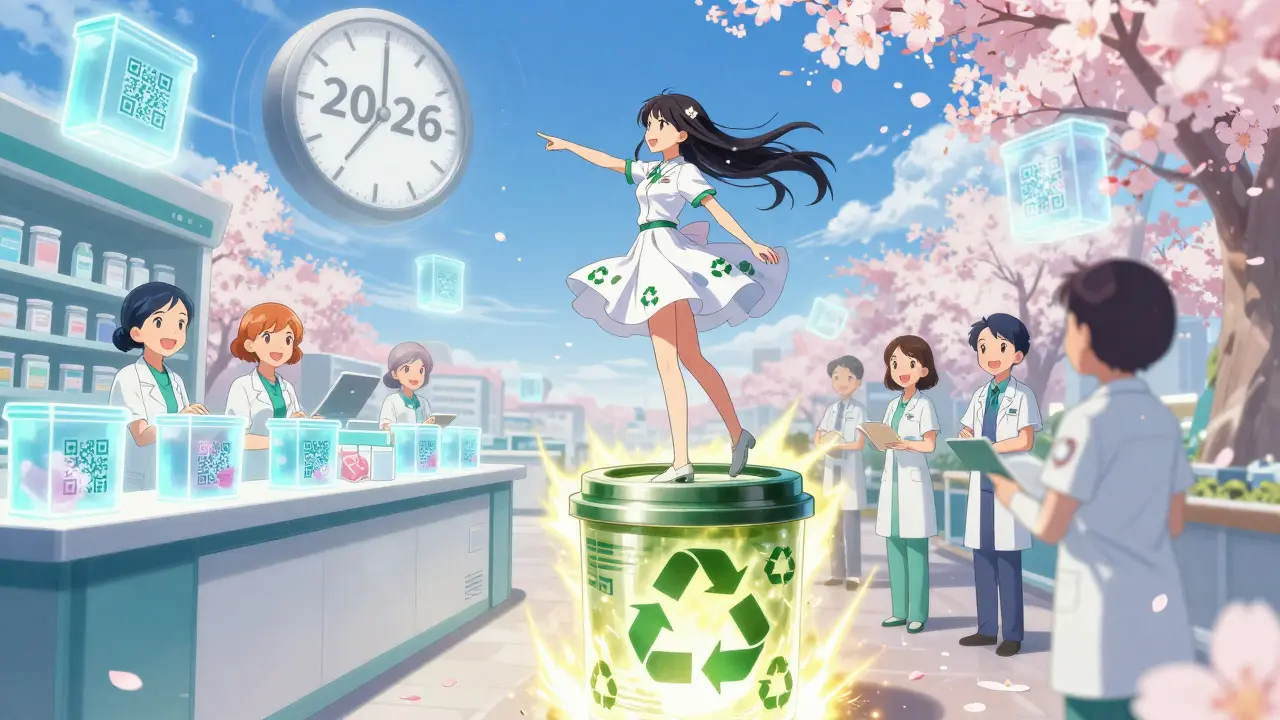
Rules are tightening. By 2026, all Australian states will require standardized sharps disposal labels and drop-off points. More pharmacies are adding dedicated sharps bins. Some councils are rolling out curbside pickup for sealed containers - just like recycling.
And yes - smart containers are coming. In the next few years, you’ll see containers with fill-level sensors and QR codes that link to disposal locations. But for now, the simple, sturdy plastic container is still your best friend.
Final Reminder: This Is About People
Disposing of sharps isn’t just a rule. It’s a responsibility. You’re not just protecting yourself - you’re protecting the person who empties your bin, the child who plays near the curb, the paramedic who responds to a call.
One needle. One second. One mistake. That’s all it takes.
So next time you use a syringe, don’t just think about the medicine. Think about the needle. And then, put it where it belongs - in the right container, in the right place.
Can I throw sharps in the regular trash if I tape the container shut?
No. Even if you tape a container shut, regular trash is not a legal or safe disposal method. Waste workers and recycling facilities aren’t equipped to handle sharps. In Australia, this is against state health regulations and can result in fines. Always use a designated sharps collection point.
Do I need a prescription to get a sharps container?
No. You can buy sharps containers over the counter at any pharmacy without a prescription. Some pharmacies also give them out for free if you’re on a pension, Medicare card, or have a chronic condition like diabetes. Ask your pharmacist.
What if I live in a rural area with no nearby disposal sites?
Many rural areas in Australia have mail-back programs. You can order a prepaid sharps disposal box from your pharmacy or local health service. Fill it, seal it, and drop it in the mail. Some community health centres also offer quarterly drop-off events. Call your local council or GP to find out what’s available.
Can I reuse a sharps container?
No. Sharps containers are single-use only. Even if they look clean, they’re not designed to be sterilized at home. Reusing them increases the risk of punctures and leaks. Always replace the container when it’s full.
Is it safe to dispose of sharps at a pharmacy?
Yes. Pharmacies in Australia are legally required to provide sharps disposal bins. The containers are collected and transported by licensed medical waste companies for safe incineration or sterilization. It’s one of the safest and most convenient options.

Jacob Hessler
Why are we even talking about this like it's a big deal? We got people dying from fentanyl overdoses and you're worried about a needle? Just throw it in the trash like everyone else. Who cares if some guy in a uniform gets poked? He signed up for that shit.
Stop coddling people. This ain't Sweden.
Danielle Arnold
So let me get this straight... I have to buy a special $20 container just to throw away a needle I used to stay alive? And if I don't? I'm a menace to society? Cool. I'll just keep using my old Gatorade bottle. At least it's got a nice flavor.
Zola Parker
I mean... what even is 'safety'? 😅
Is it the container? The rules? Or is it just fear dressed up as responsibility?
What if the real danger isn't the needle... but the system that makes us feel guilty for existing? 🤔
florence matthews
I live in a small town and the nearest drop-off is 40 miles away. I get it, safety matters. But also... life is hard. Sometimes you just need to put it in a coffee can and call it a day. No one's judging. Probably. 🙃
Kenneth Jones
If you're too lazy to use a proper container you deserve to get stabbed
Mihir Patel
OMG I just found a syringe in my kid's toy box last week 😭 I thought I was gonna lose my mind! Thank you for this post!! I didn't know about the pharmacy drop-offs here - I was using a peanut butter jar. My bad. 🙈 Now I got the real container. Life saved!
Raphael Schwartz
Australia? Why are we even reading about their rules? We got our own problems. Just use duct tape and throw it in the trash. That's how we did it in '09. Nobody died.
Marissa Staples
I think about this a lot. Not just the needle. But the person who has to pick it up. The worker. The stranger. The one who doesn’t even know you exist. There’s something sacred in that silence. We don’t see them. But they see us.
Maybe that’s the real container.
Rachele Tycksen
i used a soda bottle for 2 years lmao i thought it was fine?? now i feel kinda bad 😅 thanks for the reminder tho! got a real one today!
Grace Kusta Nasralla
I used to think safe disposal was just about rules. Then I saw a nurse cry after a needlestick. She didn’t say anything. Just sat there. Staring at her hand. I didn’t know needles carried grief too.
Stephen Alabi
The premise of this article is fundamentally flawed. It presumes that individual compliance with regulatory frameworks is the primary vector for public safety. This is a neoliberal fantasy. Structural solutions - centralized medical waste infrastructure, universal access to disposal infrastructure, and federal mandates - are the only ethical response. Your $25 plastic container is a Band-Aid on a hemorrhage.
Agbogla Bischof
In Nigeria, we use empty milk tins with tight lids. They work fine. But I agree - labeling is key. Always write 'DANGER: SHARPS' in bold. And never, ever leave it where children play. I lost a cousin to a needle in 2018. It was a vaccine syringe. He was 7. Please, be careful.
Pat Fur
I'm from Canada. We have free mail-back boxes from pharmacies. It's beautiful. No driving. No cost. Just drop it in the mailbox. Makes you feel like the system actually cares. 🇨🇦
Natasha Rodríguez Lara
I love how this post didn’t just list rules - it reminded us we’re connected. The trash collector. The kid on the sidewalk. The pet. We forget that. This? This is community care in action.
peter vencken
just got my first sharps container from the VA clinic. free. no questions asked. they even gave me a sticker that says 'i disposed right'. i'm not crying. you're crying.