
When you pick up a prescription, you might see two options: the familiar brand name or a cheaper generic version. Many people wonder - does switching to a generic drug change the risk of dangerous interactions with other meds, food, or supplements? The short answer: no. The risk of drug interactions is essentially the same for generic and brand-name medications.
Why the confusion exists
It’s easy to assume that because generics cost less, they must be different. And yes, they are different - but not in the way that matters for interactions. Generics contain the exact same active ingredient, at the same strength, in the same form (tablet, capsule, injection, etc.) as the brand-name drug. That’s the part that interacts with your body and other medications. If you’re taking warfarin, sertraline, or levothyroxine, it’s the active chemical doing the work - not the brand logo on the bottle. But here’s where things get muddy: generics can have different fillers, dyes, or preservatives. These are called inactive ingredients, or excipients. They help the pill hold its shape, dissolve properly, or look a certain way. For most people, these don’t cause problems. But if you’re allergic to lactose, corn starch, or a specific dye, a switch from brand to generic could trigger a reaction - not because the drug itself changed, but because the pill’s makeup did.How regulators ensure safety
In the U.S., the FDA requires generic drugs to prove they’re bioequivalent to the brand-name version. That means the body absorbs the active ingredient at nearly the same rate and to the same extent. The standard is strict: the amount of drug in your bloodstream must fall within 80% to 125% of the brand-name drug’s levels. For most drugs, that’s a tiny difference - often less than 5%. For drugs with a narrow therapeutic index - like warfarin, lithium, or certain seizure meds - the range is even tighter: 90% to 111%. To prove this, manufacturers run studies with 24 to 36 healthy volunteers. They measure how fast the drug enters your blood and how long it stays there. These tests don’t involve thousands of patients like the original brand-name trials did. But they’re designed to catch any meaningful difference in absorption - the key factor in drug interactions.
Real-world data says: no increase in risk
A 2020 study in Scientific Reports looked at over 17,000 patients taking generic versions of 17 cardiovascular drugs. The results? Generic users had fewer heart attacks, strokes, and deaths than those on brand-name versions. That’s not because generics are stronger - it’s likely because people stuck with generics longer due to lower cost, leading to better adherence. The FDA’s own adverse event database (FAERS) from 2015 to 2020 showed that drug interaction reports were almost identical: 0.78% for brand-name drugs, 0.82% for generics. That difference? Statistically meaningless. No higher risk. Even in complex cases - like when someone takes multiple meds for high blood pressure, diabetes, and depression - switching to a generic didn’t increase interaction risks in real-world practice. Pharmacists at major hospitals like UCSF report no spike in adverse events after generic substitution, unless a patient has a known allergy to an excipient.When differences might matter
There are rare cases where switching between generics - not between brand and generic - can cause issues. Imagine two different companies make generic versions of levothyroxine. One uses a slightly different filler that affects how fast the tablet dissolves. If you switch from one generic to another, your thyroid hormone levels might dip or spike. That’s why doctors often tell patients to stick with the same generic brand if they’re on thyroid meds, epilepsy drugs, or blood thinners. Also, some people report side effects after switching - drowsiness, nausea, or headaches. But studies show these are often nocebo effects: the mind expects something to go wrong, so it feels like it did. One WebMD analysis found complaints spiked for the first three months after a new generic hit the market - then dropped back to normal. People were blaming the generic, not the switch.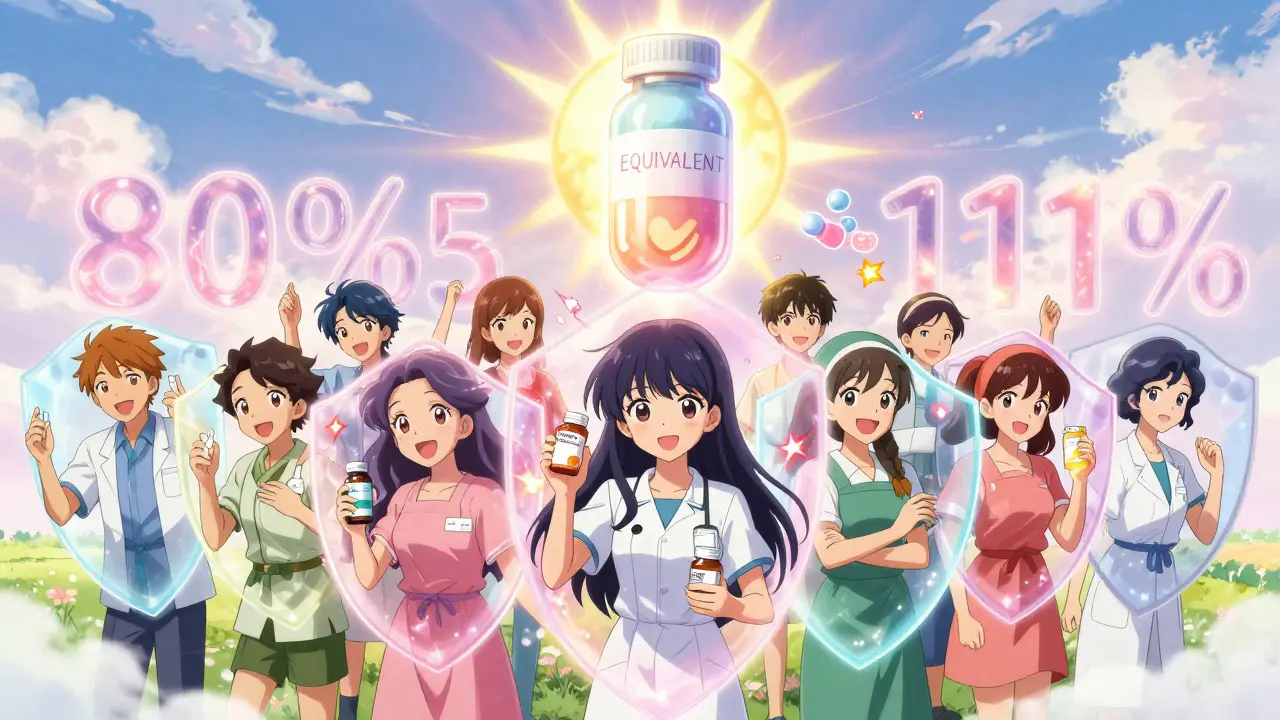
What you should do
If you’re on a medication with a narrow therapeutic index - like warfarin, digoxin, cyclosporine, or phenytoin - talk to your doctor before switching. They may recommend staying on the same brand or generic version. But for most other drugs - antibiotics, statins, antidepressants, blood pressure pills - switching is safe. Always check the pill’s appearance if you notice a change. If your generic looks different, ask your pharmacist: "Is this the same active ingredient?" They can tell you if it’s the same drug, just made by a different company. If you’ve had an allergic reaction to a pill in the past - like a rash or swelling - make sure your pharmacist knows. They can check the inactive ingredients and avoid ones that triggered you before.Bottom line
Generic drugs aren’t "weaker" or "riskier." They’re the same medicine, cheaper. The risk of drug interactions comes from the active ingredient - not the brand name. Whether you take Lipitor or atorvastatin, Zoloft or sertraline, the interaction profile is identical. The FDA, Harvard Medical School, and the American College of Clinical Pharmacology all agree: generics are therapeutically equivalent. The only time you need to be cautious is if you have a known allergy to an inactive ingredient, or if you’re on a drug where tiny changes in blood levels matter. Even then, the issue isn’t generic vs. brand - it’s one generic formulation vs. another. Save money. Take your meds. Don’t fear the generic label. Your body doesn’t care what’s printed on the bottle - it only responds to the chemical inside.Are generic drugs less effective than brand-name drugs?
No. Generic drugs must meet the same strict standards for potency, purity, and performance as brand-name drugs. They contain the same active ingredient at the same strength and work the same way in your body. Studies show they’re just as effective - and in some cases, more effective - because patients are more likely to take them consistently due to lower cost.
Can generic drugs cause different side effects than brand-name drugs?
The side effects from the active ingredient are identical. But if you’re allergic to an inactive ingredient - like lactose, gluten, or a dye - you might react differently to one formulation versus another. That’s why it’s important to tell your pharmacist about any known allergies. The pill’s color or shape doesn’t change how the drug works, but the filler might cause a reaction in sensitive people.
Is it safe to switch between different generic versions of the same drug?
For most drugs, yes. But for medications with a narrow therapeutic index - like warfarin, levothyroxine, or phenytoin - small changes in absorption can matter. If you switch between two different generics, your doctor may want to monitor your blood levels to make sure you’re still in the safe range. Always check with your pharmacist before switching generics if you’re on one of these drugs.
Why do some people say their generic drug doesn’t work as well?
Often, it’s psychological. When people know they’re taking a cheaper version, they expect it to be less effective - and sometimes, their body responds to that expectation. Studies show complaints about generics drop after the first few months. Real-world data confirms that outcomes - like blood pressure control or cholesterol levels - stay the same whether you take brand or generic.
Do pharmacists check for interactions when dispensing generics?
Yes. Pharmacists use the same drug interaction screening tools whether the drug is brand or generic. They look at the active ingredient, your other meds, your allergies, and your health conditions. The source of the drug doesn’t change the interaction risk - so their checks are the same. If you switch to a new generic, your pharmacist may still ask if you’ve noticed any changes, just to be safe.
Can I trust generics if they’re made overseas?
Yes. The FDA inspects all manufacturing facilities - whether they’re in the U.S., India, China, or elsewhere - before approving a generic drug. Every batch must meet the same quality and safety standards. In fact, many brand-name drugs are also made overseas. The location doesn’t determine safety - the FDA’s inspections do.



Doreen Pachificus
Been taking generic lisinopril for 5 years. No issues. My BP is better than when I was on the brand. Guess my body doesn't care about the logo either.
Uzoamaka Nwankpa
I used to trust generics until my cousin’s uncle’s neighbor’s dog got sick after switching. I mean, who even controls those factories? It’s not like the FDA is out there checking every pill.
Cassie Tynan
Oh wow, so the $200 brand name pill is just the generic with a fancy label and a therapist? I feel so seen. My wallet’s been crying for years and now I know why.
Vicki Yuan
The bioequivalence standards are actually incredibly strict. The 80–125% range isn’t arbitrary-it’s based on pharmacokinetic modeling and clinical outcomes. For most drugs, the difference in AUC and Cmax between brand and generic is less than 3%. That’s less than the variability you get from eating a big meal before taking it.
And yes, the FDA inspects overseas facilities. They’ve shut down plants in India and China for bad practices. If your generic was approved, it passed the same audit as the brand.
Also, the idea that generics are ‘less effective’ is a myth perpetuated by pharma marketing. People don’t notice the difference because there isn’t one. The nocebo effect is real-and expensive.
Stop paying extra for branding. Your body doesn’t know the difference. Your bank account does.
John Wilmerding
As a clinical pharmacist, I’ve reviewed thousands of med lists. The only time I’ve seen a true clinical issue from switching to generic is with levothyroxine in patients with thyroid cancer or severe hypothyroidism. Even then, it’s usually due to switching between different generic manufacturers-not brand to generic.
We always document the manufacturer and batch number for these patients. It’s not because generics are unsafe-it’s because thyroid hormone levels are so sensitive that even 5% variability can matter over time.
For 95% of patients? Generic is fine. Save your money. Take your meds. Don’t overthink it.
Charlotte N
i mean like i switched to generic sertraline last year and i swear i felt worse for like 2 weeks then it was fine but like i also started sleeping worse and eating more carbs so idk if it was the pill or my life
also why do generics look so different like why does the one i get now have a weird blue stripe and last month it was all white
my pharmacist said its the same thing but it just feels wrong
also is it true they use different dyes in different countries
like i read somewhere that china uses lead based paint on pills
or is that just a rumor
Clint Moser
Let me break this down with some hard data: The FDA’s bioequivalence thresholds are statistically derived from small n=24 trials. That’s not clinical evidence-it’s regulatory math. Real-world variability? We’re talking about 100+ million pills a year made in unregulated factories with inconsistent excipients. The FDA doesn’t test every batch. They sample. And the sampling rate? Less than 1%. That’s not oversight-it’s a gamble.
And don’t get me started on the fact that 80% of generic APIs come from China and India. No one’s auditing the raw material sourcing. The FDA’s inspection rate? 1.2% of facilities annually. That’s not safety. That’s negligence wrapped in a white coat.
They say the active ingredient is the same. But what if the impurity profile isn’t? What if trace solvents or heavy metals differ? That’s not in the bioequivalence test. That’s the silent risk.
And yes, I’ve seen patients crash after switching. They call it ‘nocebo.’ I call it ‘unmonitored chemical exposure.’
Don’t trust the system. Check your pill’s manufacturer. Demand batch numbers. Be vigilant.
Jack Wernet
Thank you for this clear and evidence-based explanation. As someone who works with patients from diverse socioeconomic backgrounds, I’ve seen how stigma around generics can lead to non-adherence. Many believe they are inferior, and this misconception has real health consequences.
The data you cited from Scientific Reports is particularly compelling-lower cost leads to higher adherence, which leads to better outcomes. That’s not just pharmacology-it’s public health.
I encourage all my patients to use generics unless there’s a documented sensitivity. The savings can mean the difference between taking medication daily or skipping doses to make it last.
Pharmacists are trained to catch subtle differences. If your pill looks different, ask. But don’t assume it’s less effective.
Shanna Sung
They’re lying. They always lie. The FDA is owned by Big Pharma. The ‘bioequivalence’ studies? Conducted by the same companies that make the generics. The volunteers? Paid college kids who get paid to say it’s fine. The data? Buried in a database no one checks. I switched to a generic and my anxiety spiked. I knew it. I just knew it. They want us dependent. They want us docile. The brand name? At least you know who made it. The generic? Could be anything. Could be poison. Could be a drone. Could be a mind control chip. I’m going back to brand. Even if it costs my rent.
Vikram Sujay
The philosophical underpinning of this issue lies in the ontological equivalence of substances versus the epistemological weight we assign to branding. The active pharmaceutical ingredient, qua chemical entity, is identical regardless of corporate nomenclature. Yet, the social construction of value-manifested in price, packaging, and perceived prestige-creates a cognitive dissonance wherein the mind perceives difference where none exists chemically.
This phenomenon mirrors the placebo effect’s inverse: the nocebo, wherein expectation alters physiological response. The pill, indifferent to its label, performs its function with mathematical precision. The human, burdened by semiotics, imposes narrative upon inert matter.
Thus, the true conflict is not between brand and generic, but between material reality and symbolic meaning. To fear the generic is to fear the erosion of illusion. Yet, in the quiet of the body, the chemistry remains unchanged.
Perhaps the greater question is not whether generics work-but why we need to believe they don’t.
Oluwapelumi Yakubu
Yo, let me drop some truth bombs on this whole generic saga. You think the FDA’s got your back? Nah. They’re just the bouncers at the club-letting in whoever pays the cover. The real OGs? The Indian and Chinese labs churning out active ingredients like it’s a TikTok dance challenge. One batch’s got more caffeine than a Starbucks double shot, next one’s got less active stuff than my ex’s apology.
And don’t even get me started on the fillers. Lactose? Corn? Talc? I got a cousin who broke out in hives after switching to a generic that had a dye made from crushed beetles. Yeah, beetles. No joke. FDA says ‘safe for most.’ But ‘most’ ain’t ‘me.’
So yeah, for the average Joe, generic’s fine. But if you’re the kind of person who sneezes when a cloud of dust hits your nose? You’re playing Russian roulette with your meds. And the gun’s got 10 chambers. One’s loaded. You just don’t know which.
My advice? Stick to the brand if you can. If you can’t? Get the batch number. Google it. Don’t be a sheep.
Dee Humprey
As a nurse who’s helped patients manage chronic conditions for 20 years, I’ve seen firsthand how cost drives adherence. A patient on warfarin switched to generic and kept taking it. The brand? They skipped doses to make it last. Result? INR went wild. Hospitalized.
Generics aren’t ‘weaker.’ They’re more accessible. And access saves lives.
If you’re on a narrow-therapeutic-index drug? Talk to your doctor. Get a baseline lab. Stick with the same manufacturer if possible.
But for 98% of people? Save your money. Take your pills. Your future self will thank you. 💪
Ashley Viñas
Oh wow, so now we’re supposed to believe that a pill made in a factory with no windows and a guy named ‘Lao’ stamping it with a rubber stamp is just as good as the one with the glossy logo and a 1980s jingle? Please. I’ve seen the documentaries. The ‘quality control’ is a joke. The FDA is underfunded. The inspectors are overworked. And the people who benefit? The billionaires who own the pharmaceutical conglomerates.
And let’s not pretend the ‘nocebo effect’ is real. People feel different because they ARE different. The inactive ingredients alter absorption. The manufacturing processes vary. The bioequivalence window? That’s a loophole, not a guarantee.
My grandmother died because they switched her to a generic heart med. She didn’t ‘believe’ it wouldn’t work. Her kidneys failed. Coincidence? Maybe. But I’m not betting my life on ‘maybe.’
Stick with the brand. Pay more. Live longer. That’s not elitism. That’s survival.
Siobhan Goggin
This is such a refreshing perspective. I used to be scared of generics too-until I started saving hundreds a month and actually remembered to refill my prescriptions. Turns out, my body didn’t care about the logo. Just that I took it.
Thank you for sharing the data. It’s so easy to be misled by fear. But facts? They’re quiet. And they’re true.
Vicki Yuan
Re: @6571 - Your grandmother’s story is heartbreaking. But correlation isn’t causation. Did the switch happen right before her decline? Or was it just timing? Many patients on heart meds have multiple comorbidities-kidney function changes, new infections, dietary shifts. One change in pill manufacturer doesn’t cause organ failure. But stopping meds because you’re afraid? That does.
Every adverse event report gets logged. The FDA has over 10 million entries. If generics were causing spikes in heart failure or kidney injury, we’d see it. We don’t. The data is clear: outcomes are the same-or better.
Don’t let one tragic story override decades of population-level evidence. That’s how myths survive.