
MAOI Tyramine Calculator
Tyramine Safety Calculator
This tool helps you assess tyramine content in foods and determine potential risk for MAOI medication users.
Tyramine Assessment
Select a food item and enter a serving size to see your tyramine intake assessment.
When you’re on an MAOI for depression, cheese isn’t the only thing you need to avoid. In fact, the real danger isn’t just in the aged cheddar or blue cheese you’ve been warned about. It’s in the miso soup you ordered for lunch, the soy sauce drizzled over your stir-fry, the pickled kimchi on your plate, or even the Worcestershire sauce in your burger. These aren’t rare outliers-they’re common foods that can spike your blood pressure to dangerous levels if you’re taking a monoamine oxidase inhibitor.
Why MAOIs and Tyramine Don’t Mix
MAOIs, like phenelzine (Nardil) and tranylcypromine (Parnate), work by blocking an enzyme called monoamine oxidase. This enzyme normally breaks down excess tyramine, a naturally occurring compound in aged or fermented foods. When MAOIs shut it down, tyramine builds up in your bloodstream. That triggers a sudden, violent release of norepinephrine, which can send your blood pressure soaring-sometimes above 180 mmHg systolic. This isn’t a mild headache or dizziness. This is a hypertensive crisis: pounding headache, blurred vision, chest pain, nausea, and potentially stroke or heart attack. Emergency treatment is required.The Real Culprits: More Than Just Cheese
Most people know to avoid aged cheeses. But what they don’t realize is that tyramine forms in any protein-rich food that’s been fermented, cured, aged, or left to sit too long. Here’s what actually contains dangerous levels:- Dry-aged salami: 95-115 mg/kg
- Pepperoni: 80-100 mg/kg
- Smoked fish: 75-90 mg/kg
- Miso paste: 60-85 mg/kg
- Soy sauce: 45-70 mg/kg
- Sauerkraut: 50-75 mg/kg
- Kimchi: 40-65 mg/kg
- Worcestershire sauce: 25-45 mg/kg
- Fish sauce: 35-55 mg/kg
- Marmite or yeast extract: 40-60 mg/kg
- Draft beer: 15-30 mg/L
- Red wine: 20-40 mg/L
- Sherry: 35-55 mg/L
- Tomato paste: 20-35 mg/kg
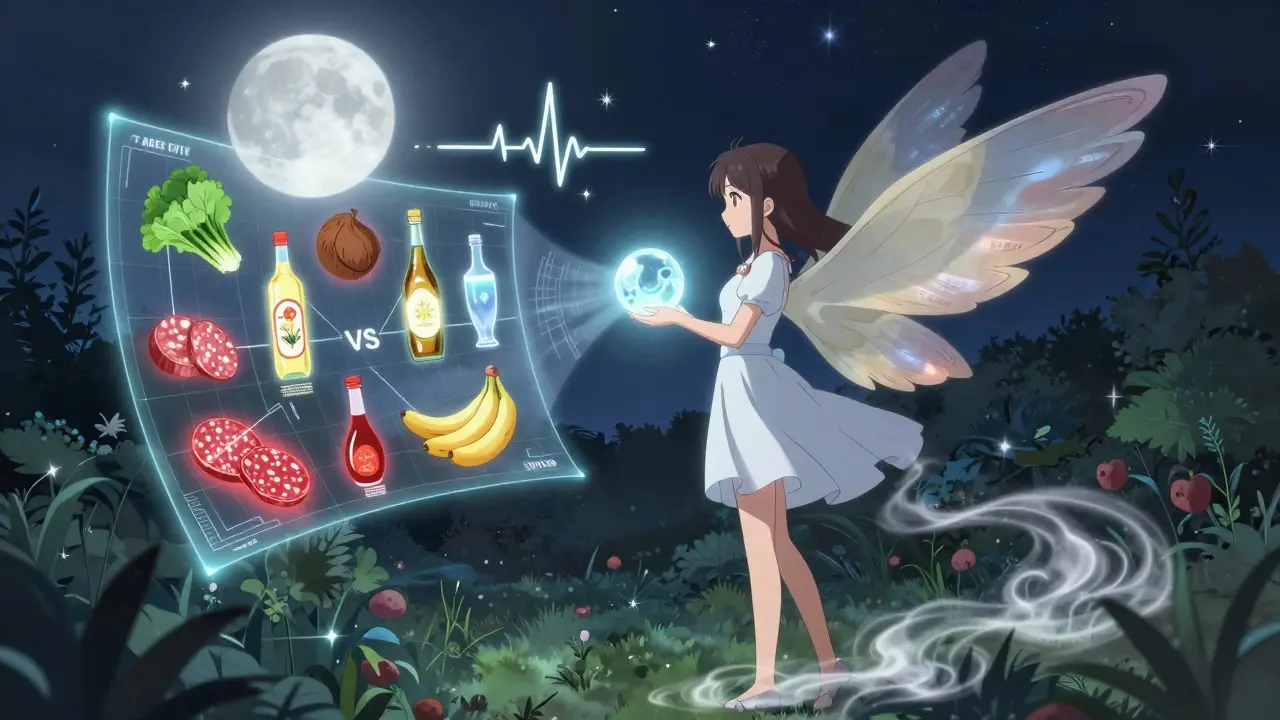
These numbers aren’t guesses. They come from food safety labs, FDA databases, and peer-reviewed studies. A single tablespoon of soy sauce can contain more tyramine than a small wedge of cheddar. And it’s not just about quantity-timing matters too. Tofu starts at just 5 mg/kg when fresh, but after 72 hours in your fridge, it can jump to 25 mg/kg. Refrigeration slows tyramine growth, but it doesn’t stop it.
Hidden Sources in Everyday Meals
You might think you’re being careful. But restaurants, packaged foods, and even home cooking hide these risks. A 2023 investigation found that 7 out of 10 popular chain restaurants couldn’t tell you if their menu items contained soy sauce or Worcestershire sauce-even when asked directly. That’s not incompetence. It’s lack of awareness. Many cooks don’t even know these ingredients are dangerous for MAOI users.Think about your typical week:
- Breakfast: Toast with Marmite? That’s 40-60 mg/kg of tyramine.
- Lunch: Sushi with soy sauce? You’re getting 45-70 mg/kg in just a few drops.
- Dinner: Stir-fry with fermented black beans and fish sauce? That’s two high-risk ingredients in one dish.
- Snack: Pickled beets from the deli counter? 30-55 mg/kg.
Even seemingly safe foods become risky if they’re overripe. Bananas, avocados, and fava beans can spike in tyramine as they sit past their prime. A banana with brown spots isn’t just ripe-it’s potentially dangerous.
What About Soy? The Great Debate
There’s confusion around soy. Some doctors say avoid all fermented soy. Others say small amounts of soy sauce (like one tablespoon) might be okay for some people. The truth? There’s no universal answer. One person might sip soy sauce with no issue. Another might end up in the ER. It depends on your metabolism, how long you’ve been on the MAOI, and how sensitive your body is to tyramine.Dr. Sarah R. Lieber from Columbia University says, “The cheese reaction is merely the tip of the iceberg.” That’s because most patients don’t realize their crisis came from soy sauce, not cheese. In a 2022 survey of 347 MAOI users, 32.1% had a reaction from fermented condiments. Only 18% blamed cheese.
Why This Is Harder Than It Sounds
Following the MAOI diet isn’t just about reading labels. It’s about learning a new language. You need to recognize words like:- Fermented
- Aged
- Cured
- Smoked
- Marinated
- Pickled
- Yeast extract
- Hydrolyzed vegetable protein
And even then, you’re not always safe. Some products don’t list ingredients clearly. Some restaurants don’t know what’s in their sauces. And if you’re traveling or eating out, you can’t always control what’s in your food.
That’s why 68.3% of MAOI users report at least one dietary slip-up in their first six months. Most aren’t careless-they’re misled. They thought miso was safe. They didn’t know fish sauce was a problem. They ate kimchi thinking it was just “healthy probiotics.”
What You Can Do
The good news? You can manage this. But it takes effort.- Get educated: Ask your doctor for a detailed food list. The Mayo Clinic’s 2023 guidelines are among the best. They include safe alternatives and practical substitutions.
- Read every label: Check for hidden sources like yeast extract, hydrolyzed protein, or fermented ingredients. Don’t trust “low-sodium” claims-tyramine isn’t sodium.
- Carry a warning card: 87% of emergency doctors prefer patients to have a printed MAOI dietary warning card. It’s simple: “I am on an MAOI. Avoid tyramine-rich foods. Hypertensive crisis risk.”
- Use trusted resources: Groups like the MAOI Support Network on Facebook have over 12,000 members who share restaurant reviews, safe recipes, and label-reading tips.
- Be consistent: The risk doesn’t disappear after you stop the medication. You must avoid high-tyramine foods for 14 days after your last dose.
Is There Hope for the Future?
Yes. Researchers are working on better options. The FDA approved a new enzyme supplement called TyraZyme in 2023 that reduces tyramine absorption by 58% in trials. It’s not a free pass-but it could help some people manage occasional slips.There’s also the transdermal selegiline patch (Emsam). At the lowest dose, it allows up to 10 grams of tyramine per day-meaning you can eat a normal diet without fear. That’s a game-changer.
And in pilot studies at Massachusetts General Hospital, doctors are testing genetic markers to see who naturally breaks down tyramine faster. This could lead to personalized diets-where some people get more flexibility based on their biology.
Is It Worth It?
MAOIs aren’t first-line antidepressants. But for people with treatment-resistant depression-those who haven’t responded to SSRIs or other meds-they’re often the only thing that works. Studies show they’re 65-70% effective in these cases, compared to 45-50% for most other drugs.In the same 2022 survey, 78.6% of users said the dietary restrictions were worth it. They got their life back. Their mood stabilized. They could function again. But 41.2% also said they’d canceled social events because they were scared of eating out. That’s the hidden cost.
It’s not just about avoiding food. It’s about reclaiming your life without fear. With the right tools, education, and support, you can do both.
Can I eat tofu if I’m on an MAOI?
Fresh tofu is low in tyramine-around 5 mg/kg. But once it’s opened and stored in the fridge, tyramine levels can rise to 25 mg/kg in just 72 hours. If you eat tofu, buy it fresh, use it within 2 days, and avoid any that’s been sitting in the deli case or has a sour smell. Never eat fermented tofu or stinky tofu-it’s high risk.
Is soy sauce ever safe on MAOIs?
Some doctors say one tablespoon of soy sauce might be okay for certain patients, but this is not universally recommended. Soy sauce contains 45-70 mg/kg of tyramine. For many, even that small amount can trigger a reaction. The safest approach is to avoid it entirely unless your psychiatrist has tested your tolerance under controlled conditions. Never assume it’s safe based on anecdotal advice.
What about beer and wine?
Draft beer is riskier than bottled beer because it’s exposed to air longer, allowing more tyramine to form. Red wine has 20-40 mg/L, sherry 35-55 mg/L, and vermouth can hit 50-75 mg/L. If you drink alcohol, stick to small amounts of fresh, unfermented options like clear spirits (vodka, gin) with non-fermented mixers. Avoid aged wines, craft beers, and fortified wines entirely.
Do I need to avoid all pickled foods?
Most pickled vegetables are high in tyramine because they’re fermented. Sauerkraut, kimchi, pickled beets, and pickled onions all contain 30-75 mg/kg. Fresh pickles made with vinegar and no fermentation (like quick-pickled cucumbers) are generally safe. Always check how the food was made-if it was fermented over weeks, avoid it.
What if I accidentally eat something high in tyramine?
If you feel a sudden headache, rapid heartbeat, chest tightness, or blurred vision, check your blood pressure immediately. If it’s above 180/110, call emergency services. Don’t wait. Carry your MAOI warning card and tell responders you’re on an MAOI and may have ingested tyramine. Time is critical-this is a medical emergency.
Are there safe alternatives to fermented sauces?
Yes. Use fresh herbs, lemon juice, vinegar, garlic, ginger, and salt for flavor. Try tamari made without wheat fermentation (check the label), or use coconut aminos-a soy-free, low-tyramine substitute that tastes similar to soy sauce. Many grocery stores now carry MAOI-safe condiment lines like NutriMind’s certified products.
How long do I need to follow this diet?
You must avoid high-tyramine foods for the entire time you’re on the MAOI, and for at least 14 days after your last dose. This is because the enzyme inhibition lasts beyond the drug’s presence in your system. Stopping the medication doesn’t instantly restore your body’s ability to process tyramine.
Why do some doctors say MAOIs are outdated?
They’re not outdated-they’re underused. Newer antidepressants like SSRIs are easier to take because they don’t require strict diets. But for people who haven’t responded to those drugs, MAOIs are often the most effective option. The problem isn’t the drug-it’s inconsistent education. Many primary care doctors still don’t know the full list of tyramine triggers. That’s why patient education and support networks are so vital.
If you’re on an MAOI, you’re not alone. Thousands of people manage this diet successfully. It’s not about perfection-it’s about awareness. Learn the risks. Know your triggers. Ask questions. And don’t let fear stop you from living. With the right knowledge, you can stay safe and stay well.




Kathryn Featherstone
I was on Nardil for two years and this post saved my life. I thought kimchi was just 'healthy probiotics'-until I ended up in the ER with a headache that felt like my skull was splitting. Never again. Now I carry that warning card everywhere. Seriously, if you're on an MAOI, print one out. It's not dramatic-it's necessary.
Nicole Rutherford
Of course you're all panicking. Nobody tells you this stuff because Big Pharma doesn't want you to know MAOIs are basically a death sentence with a side of soy sauce. They push these drugs like they're vitamins. Meanwhile, your neighbor's miso soup is quietly trying to kill you. Wake up.
Mark Able
Bro I just had pho last week with fish sauce and I'm fine. You guys are overreacting. I mean, come on. It's not like I'm eating a whole jar of soy sauce. My cousin's aunt's neighbor took MAOIs and ate pickled herring and lived to tell about it. Maybe it's just a myth? Or maybe you're all just scared of flavor?
Dorine Anthony
Thank you for this. I’ve been on Parnate for 18 months and I still get nervous about grocery shopping. I didn’t know tomato paste was risky-now I read every label like it’s a treasure map. The Mayo Clinic list is gold. Also, coconut aminos are a game-changer. I use them in everything now. You can still eat delicious food. It just takes a little extra work.
Marsha Jentzsch
Wait-so you’re telling me that my favorite kimchi? My daily soy sauce drizzle? My Marmite toast? IT’S ALL A TRAP?!?!? And they don’t even put warning labels on the bottles?!?!? I’m calling the FDA right now. This is a cover-up. They’re hiding this from us because they’re scared of people waking up and realizing antidepressants are just chemical prisons with side dishes of death!!
Janelle Moore
So if I eat a banana with a brown spot I'm gonna die? And soy sauce is poison? And my beer is a bomb? What's next? Is water dangerous now? I think this is all made up by people who hate fun. I'm gonna eat all the cheese and soy sauce I want and see what happens. Maybe I'll get lucky.
Henry Marcus
Let me tell you what’s really going on here. The FDA, Big Pharma, and the soy industry are in cahoots. They’ve been suppressing research on tyramine for decades because MAOIs are the only thing that actually works for deep depression-and they don’t want you to know how dangerous they are. That’s why your doctor doesn’t warn you. That’s why restaurants don’t know what’s in their sauces. They’re all in on it. The ‘warning card’? It’s a distraction. The real solution? Get off the system. Go off-grid. Eat fresh. Live wild.
William Liu
This is one of the most helpful posts I’ve read in years. I’ve been on MAOIs for 5 years and I’ve had two close calls. One was from Worcestershire in a salad dressing. I didn’t even know it was in there. Now I make my own dressings. I’ve learned to cook again. It’s not easy, but it’s worth it. You’re not broken-you’re just learning a new way to live. Keep going.
jessica .
MAOIs are for weak people who cant handle SSRIs. America is full of hypochondriacs who think a banana is a weapon. In my country, we just eat what we want and deal with it. Also, you spell tyramine wrong. Its tyramine not tyramine. I know because I read it in a medical journal once. You people need to stop being so dramatic.
Ryan van Leent
Why are we even talking about this? Just stop taking the meds if the diet is so hard. Everyone says MAOIs are the last resort so why not just switch? I mean come on. You're telling me you'd rather live like a prisoner than take a pill that doesn't make you paranoid about your lunch? I don't get it.
Sajith Shams
You all are missing the point. The real danger is not the food. It’s the lack of awareness in Western medicine. In India, we’ve used fermented foods for centuries. We know how to handle them. We don’t panic. We don’t fear. We eat. We live. You need to stop treating your body like a bomb and start trusting your metabolism. Also, soy sauce is not poison. It’s culture.
Adrienne Dagg
OMG I just realized I ate kimchi yesterday 😱 I'm gonna die 😭 I'm so sorry I didn't know 😭 I thought it was just spicy cabbage 😭 I'm going to bed now and I'm never eating again 💀
Anna Sedervay
It is, indeed, a matter of considerable concern that the dissemination of accurate dietary information regarding monoamine oxidase inhibitors remains so egregiously inconsistent across medical institutions. The proliferation of misinformation, particularly in digital forums, is both alarming and disheartening. One must exercise extreme diligence when interpreting food labels, as the presence of hydrolyzed vegetable protein or yeast extract may constitute an insidious, insidious, insidious threat. I recommend, with the utmost formality, consulting the 2023 Mayo Clinic guidelines, which are, in my estimation, the only authoritative source on the matter. I have, in fact, annotated them in triplicate.