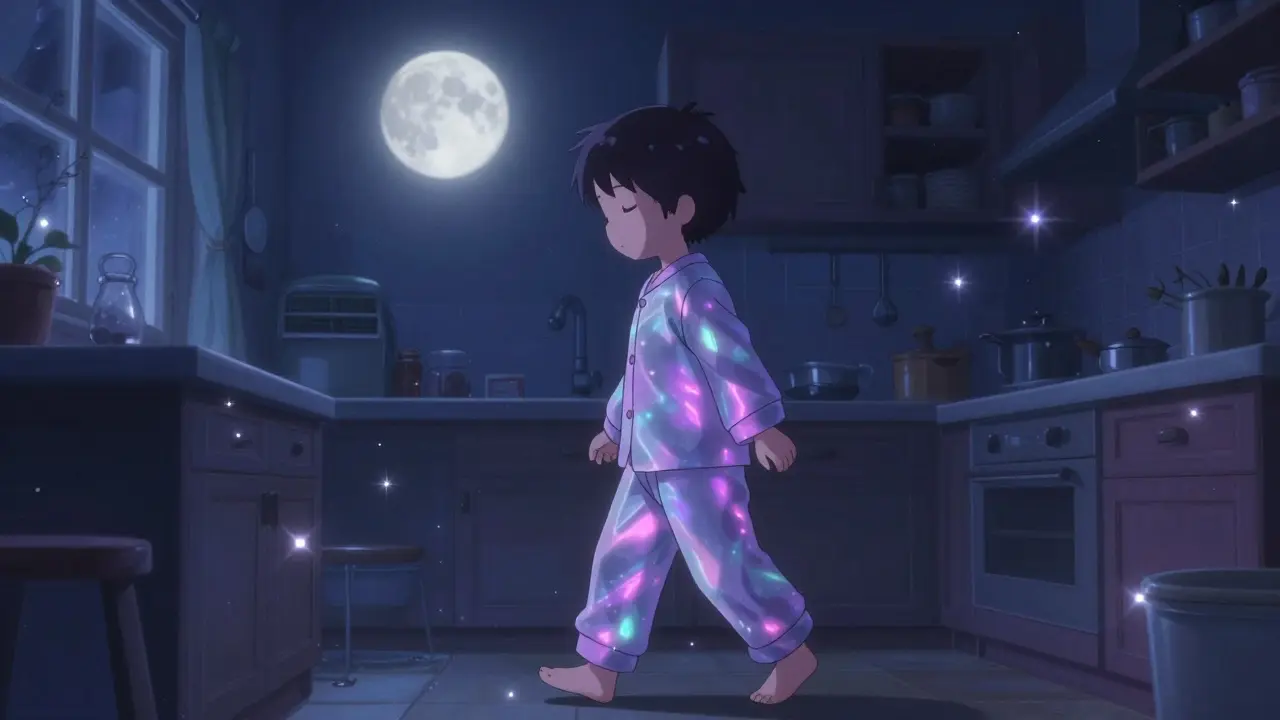
Imagine waking up to find your child standing in the kitchen at 2 AM, calmly trying to make a sandwich while completely fast asleep. Or perhaps you've experienced the sheer panic of a night terror-where you wake up screaming, heart racing, but with absolutely no memory of what happened. These aren't just bad dreams; they are Parasomnia is a category of sleep disorders characterized by abnormal behaviors, movements, or perceptions that occur during sleep transitions. While they can be terrifying for the observer and the sleeper, the good news is that most cases are manageable with the right environmental tweaks and behavioral shifts.
Key Takeaways for Fast Relief
- Safety First: Clear the bedroom of sharp objects and install door alarms.
- Sleep More: Increasing total sleep time often reduces episode frequency.
- Timing is Everything: Scheduled awakenings can stop episodes before they start.
- Know the Difference: Night terrors are NREM arousal events, not REM nightmares.
The Science of Sleep Arousal: What Is Actually Happening?
To fix the problem, we have to understand where it starts. Both sleepwalking (somnambulism) and night terrors are classified as "disorders of arousal." This means the brain gets stuck between stages of sleep. Specifically, these events happen during NREM Sleep (non-rapid eye movement sleep), particularly the deep slow-wave sleep of stages 3 and 4. Unlike a nightmare, which happens during REM sleep and leaves you with a vivid, scary story to tell, these parasomnias usually result in total amnesia. About 95% of people have no clue they ever left their bed. For those with night terrors, the body goes into a full "fight or flight" mode. Your heart rate can spike from a resting 60-100 bpm up to 140 bpm, and you might break into a profuse sweat, all while remaining technically asleep.
Sleepwalking vs. Night Terrors vs. Nightmares
It's common to lump these all together, but they are biologically different. If you're trying to manage these episodes, knowing the specific type is the only way to choose the right intervention. For instance, while a nightmare can be solved by comforting someone awake, trying to wake someone from a night terror can sometimes make the episode last longer or cause the person to react aggressively.
| Feature | Sleepwalking | Night Terrors | Nightmares |
|---|---|---|---|
| Sleep Stage | Deep NREM | Deep NREM | REM |
| Typical Timing | First 1/3 of night | First 90-120 mins | Second half of night |
| Memory of Event | Usually none | Almost never | Vivid recall |
| Physical Response | Complex movement | Intense panic/sweat | Moderate arousal |
| Ease of Waking | Difficult | Very difficult | Easy |
Immediate Safety Modifications: Your First Line of Defense
Before you look into medication or therapy, you must secure the environment. This is the single most important step in parasomnia management because the primary risk isn't the sleep disorder itself, but the injury that happens during an episode. According to clinical data, placing a mattress on the floor can reduce fall injuries by up to 75%.
Start by auditing your home for "hazard zones." Remove sharp objects, heavy lamps, or fragile decor within a 10-foot radius of the bed. For children or adults prone to wandering, invest in simple door alarms (usually $20-$50) and secure window locks. These tools don't stop the episode, but they alert the caregiver immediately, preventing the person from leaving the house or entering a dangerous area like a kitchen or bathroom.

Behavioral Strategies That Actually Work
Once the room is safe, you can start addressing the root cause. Most parasomnias are driven by "sleep pressure"-essentially, the brain is too tired, making the transition between sleep stages unstable. This is why Sleep Extension is so effective. By adding just 30 to 60 minutes of extra sleep per night, you can reduce the pressure on those deep NREM stages, which has shown a 65% effectiveness rate in pediatric patients.
Another powerful tool is the "scheduled awakening." If episodes happen at a predictable time (e.g., always two hours after falling asleep), wake the person gently about 15-30 minutes before that window. Do this for 7 to 14 nights in a row. By briefly interrupting the sleep cycle, you essentially "reset" the brain and can prevent the arousal disorder from triggering. This method has a success rate of 70-80% when done consistently.
When to See a Professional and Medication Options
For most children, these episodes are a phase. About 80-90% of sleepwalking and night terrors resolve on their own by adolescence. However, adults who suddenly develop these symptoms should be cautious. Adult-onset parasomnia can sometimes be a red flag for underlying neurological issues or other sleep disorders like Obstructive Sleep Apnea, which can trigger arousals by cutting off oxygen to the brain.
If episodes occur more than twice a week or involve violent behavior, it's time for a sleep study (polysomnography). While doctors generally avoid medication as a first choice, some may prescribe low-dose Clonazepam (a benzodiazepine) for severe cases. While it can be 60-70% effective, it carries a risk of dependency. A safer alternative often discussed in clinical reviews is Melatonin, which provides a more modest 40-50% effectiveness but with far fewer side effects.
Managing the Emotional Toll on Families
It's not just the sleeper who suffers; the partners and parents often live in a state of high anxiety. The fear of a child wandering outside or a partner hurting themselves can lead to chronic insomnia for the caregiver. Establishing a rock-solid bedtime routine-cool room temperature (60-67°F), no screens an hour before bed, and a consistent wake-up time-helps stabilize the circadian rhythm. This consistency can reduce episode frequency by up to 50%.
Should I wake someone who is sleepwalking?
Generally, avoid shaking or shouting to wake them, as this can cause a startle response or aggression. Instead, gently guide them back to bed using a soft voice and light touch. If they are not in danger, the safest move is to simply lead them back to their room.
Are night terrors the same as nightmares?
No. Nightmares happen during REM sleep (usually late in the night) and the person wakes up remembering the dream. Night terrors happen during deep NREM sleep (usually early in the night), involve intense physical panic, and the person typically has no memory of the event the next morning.
Can stress cause sleepwalking?
Yes. Stress, anxiety, and sleep deprivation increase "sleep pressure," making the transitions between sleep stages more erratic. This is why periods of high stress often trigger an increase in the frequency of parasomnia episodes.
At what age should I be worried about sleepwalking?
Sleepwalking is very common in children aged 4-8. However, if it persists beyond age 10, becomes violent, or starts happening daily, you should consult a sleep specialist to rule out other conditions.
Do I need a prescription for a sleep study?
Yes, a polysomnography study usually requires a referral from a primary care physician or a neurologist. It is recommended if there is a high risk of injury or if adult-onset symptoms appear suddenly.
Next Steps and Troubleshooting
If you're dealing with this right now, start a sleep diary. Track the exact time episodes occur, what happened the day before (stress, caffeine, late bedtime), and the duration of the event. Do this for 4-6 weeks. This data is gold for a doctor and will help you identify if "scheduled awakenings" are the right fit for your specific timing. If you notice that episodes only happen when the room is too warm or after a particularly short night of sleep, you have an immediate lever to pull to improve the situation.