

When you take a pill for high blood pressure, diabetes, or cancer, you expect it to help. But sometimes, it causes problems you didn’t sign up for-rash, diarrhea, fatigue, or worse. Why does this happen? The answer isn’t just "bad luck" or "your body doesn’t like it." It’s about on-target and off-target drug effects. These aren’t just technical terms for scientists. They explain why some side effects are predictable, and why others catch everyone by surprise.
What Are On-Target Effects?
On-target effects are what the drug was designed to do-but in the wrong place. Think of it like a key that fits one lock perfectly. The drug binds to its intended target, say, a protein that drives cancer growth. That’s good. But that same protein also exists in healthy skin cells, the gut, or the heart. When the drug hits those cells too, you get side effects that are actually the same action, just in the wrong tissue. For example, EGFR inhibitors used in lung cancer block a protein that helps tumors grow. But EGFR is also vital for skin repair. So patients often get severe acne-like rashes-not because the drug is broken, but because it’s working exactly as planned, just not just where it should. About 68% of patients on these drugs get this rash, and nearly a quarter need their dose lowered because of it. Statins, used to lower cholesterol, are another classic case. They block HMG-CoA reductase, an enzyme in the liver that makes cholesterol. That’s the on-target effect. But that enzyme is also active in muscle cells. When it’s blocked there, some people get muscle pain or even dangerous muscle breakdown (rhabdomyolysis). This isn’t a flaw-it’s the same mechanism, playing out in a tissue that wasn’t the target. These effects are predictable. Doctors know they’re coming. That’s why they monitor liver enzymes, skin changes, or muscle strength. They’re not surprises. They’re side effects you can plan for.What Are Off-Target Effects?
Off-target effects are the drug hitting something it wasn’t supposed to. The key slipped into a different lock. This is where things get messy. Most small-molecule drugs-pills you swallow-don’t just bind to one target. Studies show they typically interact with six or more proteins at therapeutic doses. Kinase inhibitors, used in cancer, are especially promiscuous. One drug might bind to 25 different kinases. That’s not a bug; it’s chemistry. Molecules are sticky. If two proteins look even a little alike, the drug might bind to both. Take imatinib (Gleevec). It was designed to block BCR-ABL, the protein that drives chronic myeloid leukemia. That’s its on-target effect. But it also blocks c-KIT, a protein found in gut cells and mast cells. That’s why patients on imatinib often get swelling in their legs and around their eyes. It’s not a mistake-it’s an off-target effect. Some off-target effects are dangerous. Chloroquine, once used for malaria and briefly touted for COVID-19, was later shown to disrupt lysosomes-cellular recycling centers-regardless of its intended target. That’s why it caused heart rhythm problems. The drug wasn’t acting on its "official" target at all. It was wrecking something else entirely. The scary part? Off-target effects are often unpredictable. Two people can take the same drug, and only one gets a severe reaction. Why? Genetics, metabolism, or even gut bacteria can change how a drug behaves in the body. A 2019 study found that even statins, which work the same way in the liver, trigger completely different gene responses in different cell types. That’s why some people get liver issues, others get muscle pain, and some get nothing.Why Do Some Drugs Have More Side Effects Than Others?
Not all drugs are created equal. The type of drug matters a lot. Small molecule drugs-like pills and capsules-are usually made to slip into tight protein pockets. But because they’re small, they can fit into similar pockets on other proteins. That’s why they have, on average, 6.3 off-target interactions. Biologics-like monoclonal antibodies (Herceptin, Keytruda)-are much bigger. They’re designed like precision missiles. They bind to one specific target on the surface of a cell. That’s why they have fewer off-target effects-only about 1.2 on average. But they can still cause serious on-target side effects. Herceptin, for example, targets HER2, which is overactive in some breast cancers. But HER2 is also present in heart tissue. So some patients develop heart failure-not because the drug is toxic, but because it’s working too well in the wrong place. That’s why biologics often have cleaner side effect profiles, but when they do go wrong, it’s often severe. And then there are drugs that were never meant to do what they do now. Thalidomide was developed as a sedative. It caused horrific birth defects because it interfered with blood vessel formation in developing limbs. That was an off-target effect. But decades later, scientists realized it also modulates the immune system. Now it’s a key treatment for multiple myeloma. Sometimes, an off-target effect becomes the main benefit.
How Do Scientists Find These Effects Before Patients Do?
Drug companies don’t wait for people to get sick to find out what a drug does. They use advanced tools to map out every possible interaction before a drug reaches humans. One method is chemical proteomics. They take a drug and stick it on a bead, then dip it into a soup of human proteins. Anything that sticks to the drug is a potential target. This can find dozens of off-targets in one experiment. Another is transcriptomics. Scientists treat human cells with a drug and then scan all the genes that turn on or off. If the gene changes match what happens when you delete the target gene using CRISPR, it’s likely an on-target effect. If the changes are different, it’s off-target. The 2019 Nature Scientific Reports study used this to show that statins affected different genes in liver, muscle, and immune cells-even though they all blocked the same enzyme. That’s why side effects vary so much. These methods are now standard. The FDA requires off-target screening for new drugs. Companies like Genentech and Novartis use proprietary tools to screen thousands of targets at once. The Open Targets Platform, used by 87% of top pharma companies, combines genetic, chemical, and clinical data to predict which targets are safe. Still, no method is perfect. A drug that looks clean in a lab might cause problems in humans. Why? Because cells in a dish don’t behave like cells in a body. That’s why 40% of drug failures in Phase II trials are due to unexpected toxicity-and most of those are off-target effects.What This Means for Patients
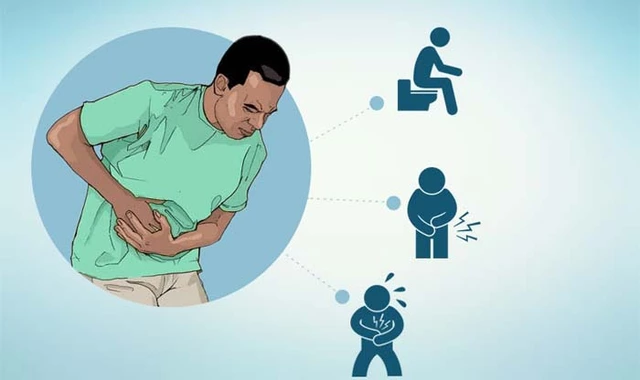
You don’t need to be a scientist to understand this. If you’re on a new drug and you get a side effect, ask: is this the drug working too well, or is it doing something it shouldn’t? Diarrhea from metformin? That’s on-target. Metformin lowers blood sugar by slowing glucose absorption in the gut. The diarrhea? That’s the drug doing its job-just a little too aggressively. It’s annoying, but it’s expected. Your doctor can adjust the dose. But if you’re on metformin and suddenly get severe muscle pain or dark urine? That’s off-target. That’s not supposed to happen. That’s a red flag. Most patients don’t know the difference. A Reddit post with over 1,200 upvotes said it perfectly: "I didn’t realize the diarrhea from my diabetes medication was actually the intended effect working too well in my gut." That’s on-target. That’s the kind of insight that helps patients feel less scared and more in control. Doctors see this every day. A 2021 survey found that 82% of physicians consider on-target side effects "expected and manageable." But only 37% say the same about off-target effects. Why? Because off-target effects are unpredictable. They can be mild or life-threatening. And they’re often the reason a drug gets pulled from the market.


Alfred Schmidt
Oh wow, another overlong science article that treats me like I’m a med student and not someone who just wants to know why their skin is falling off from cancer drugs. Seriously? 68% get rashes? That’s not a side effect-that’s a feature with a warning label. I didn’t sign up for acne with my chemo. This isn’t medicine, it’s biological roulette with a 20% chance of your doctor saying ‘we knew this might happen’ while you cry in a hospital gown.
Sam Davies
Ah yes, the classic ‘on-target’ euphemism for ‘we designed a sledgehammer to crack a nut, and now your skin is a battlefield.’ How quaint. Off-target? More like ‘oops, we forgot to unplug the toaster before dropping it in the bath.’ But hey, at least the pharma execs got their bonuses. Meanwhile, I’m over here Googling ‘can I survive without my liver?’ after my statin prescription. Truly, the golden age of pharmacology.
Christian Basel
Chemical proteomics and transcriptomic profiling are foundational for deconvoluting polypharmacological profiles, but the clinical translation remains plagued by inter-individual variability in pharmacokinetics and tissue-specific gene expression signatures. The disconnect between in vitro models and in vivo systems is a systemic bottleneck-especially when you factor in microbiome modulation of drug metabolism. Most of these ‘predictive’ platforms still operate on correlation, not causation. We’re still flying blind with 40% Phase II failures. It’s not a bug. It’s the system.
Alex Smith
So let me get this straight-your drug works perfectly… just not where you wanted it to? That’s like ordering a pizza and getting a toaster because the delivery guy got confused. And yet we call this ‘precision medicine.’ 😂
But seriously, the fact that metformin causes diarrhea because it’s working too hard in your gut? That’s the kind of thing that should be on every patient handout. I’ve seen people quit their meds because they thought it was ‘some weird infection.’ If we explained on-target vs off-target like this, people wouldn’t panic every time they got a weird symptom. Maybe we should just replace all drug inserts with memes.
Roshan Joy
This is so helpful! 🙏 I’ve been on metformin for 3 years and always thought the stomach issues meant I was doing something wrong. Now I know it’s just the drug doing its job-just a little too enthusiastically in my intestines. Thanks for explaining it so clearly! I’ll share this with my cousin who’s just started on statins too. 💪❤️
Adewumi Gbotemi
So the drug is like a man who knows how to fix your car but also starts fixing your neighbor’s bike by accident. That’s the on-target. And then he also paints your dog purple? That’s off-target. I get it now. Simple. Thank you.
Matthew Miller
Oh please. You’re telling me we’re still using 1980s-era drug design and calling it science? We’ve got AI, quantum computing, and CRISPR-and we’re still guessing which proteins a pill will stick to? This isn’t medicine. It’s alchemy with a FDA stamp. And you call that progress? I’d rather take a placebo and a prayer.
Madhav Malhotra
Very interesting! In India, many people don’t even know why they’re getting side effects. They just stop taking the medicine. I think this kind of info should be translated into more languages-maybe even made into short videos. People need to know: it’s not their fault. It’s just biology being messy. 🙏
Priya Patel
Okay but imagine if your ex was a drug. On-target? They still love you… but they’re showing up at your work. Off-target? They start dating your dog. That’s imatinib right there. 😭 I’m crying. This is the most relatable science post I’ve ever read. I need a t-shirt that says ‘I survived on-target AND off-target.’
Jennifer Littler
Chemical proteomics is standard now, but the real bottleneck is the lack of dynamic tissue-specific models. Most screening uses immortalized cell lines-totally disconnected from physiological context. Even organoids don’t capture immune-metabolic crosstalk. We need multi-omic, spatially resolved human tissue mapping at scale. Until then, we’re just lucky if a drug doesn’t kill you.
Jason Shriner
so like… drugs are just… kinda… winging it? 😶🌫️
we spent 10 billion dollars and now we know… it’s chaos? with a patent?
brb gonna go stare at my pill bottle like it’s a cursed artifact