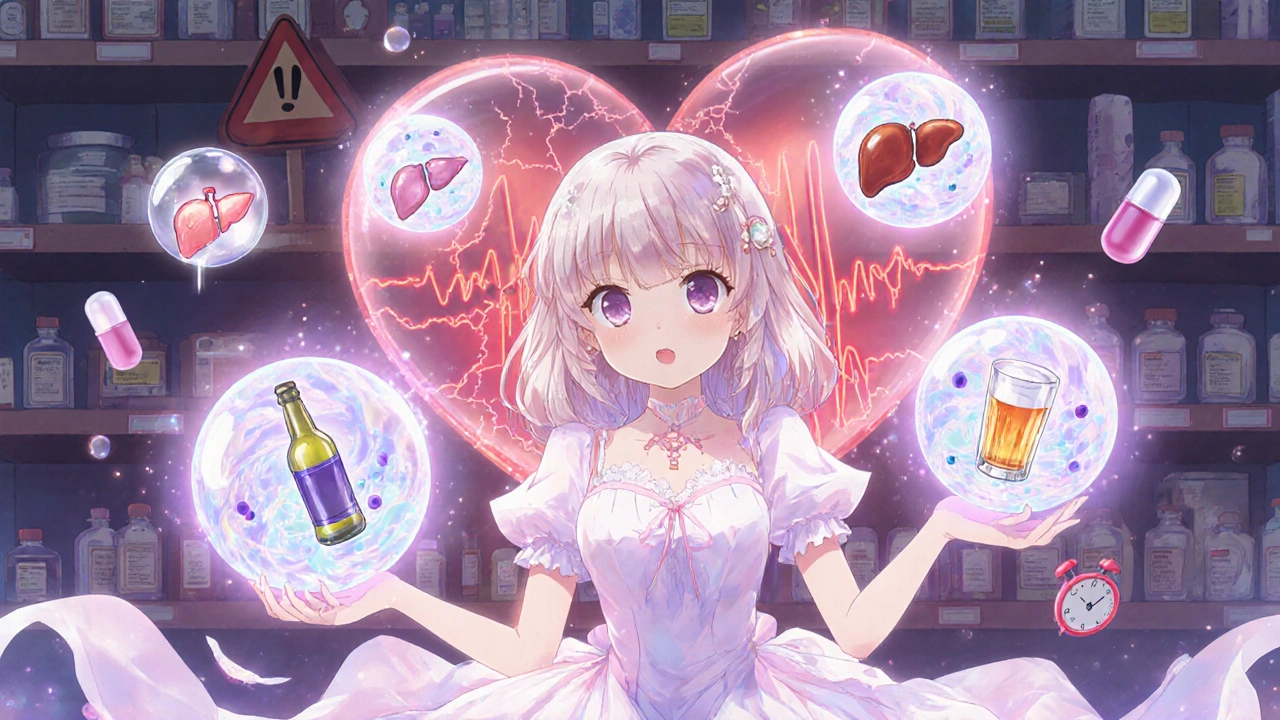
Wine and Prescriptions: What You Need to Know About Alcohol and Medications
When you take wine and prescriptions, the combination of alcohol and medication can trigger dangerous reactions that aren't always obvious. Also known as alcohol-drug interactions, this isn’t just about getting drunk—it’s about how your body processes both substances together, often with serious consequences. Many people think a glass of wine is harmless, especially if they’re not heavy drinkers. But the truth is, even small amounts of alcohol can change how your liver breaks down meds, making them too strong or too weak.
Take blood pressure pills, medications used to manage hypertension. Alcohol can drop your blood pressure even further, leading to dizziness or fainting. Or consider antidepressants, drugs that affect brain chemicals to improve mood. Mixing them with wine can make you feel more tired, dizzy, or even increase the risk of liver damage. And it’s not just about the obvious ones—painkillers, medications used to relieve discomfort like acetaminophen or opioids become far more dangerous with alcohol. Your liver doesn’t handle the extra load well, and over time, that can lead to permanent damage.
Some prescriptions, like those for warfarin or metformin, don’t just interact—they can turn a simple evening drink into a medical emergency. Warfarin, used to prevent blood clots, becomes unpredictable with alcohol, raising your risk of dangerous bleeding. Metformin, a common diabetes drug, can cause lactic acidosis if mixed with even moderate drinking. These aren’t rare cases. Studies show that over 50% of adults on chronic meds drink alcohol occasionally—and many don’t realize the risk.
It’s not about giving up wine entirely. It’s about knowing which meds play nice and which don’t. If you’re on anything for your heart, liver, brain, or metabolism, check with your doctor before sipping. A simple question like, "Can I have wine with this?" could prevent a hospital visit. Below, you’ll find real-world examples of how alcohol clashes with common prescriptions—some surprising, some deadly. These aren’t guesses. They’re based on actual patient cases and clinical data. What you learn here could save your life—or someone you care about.