
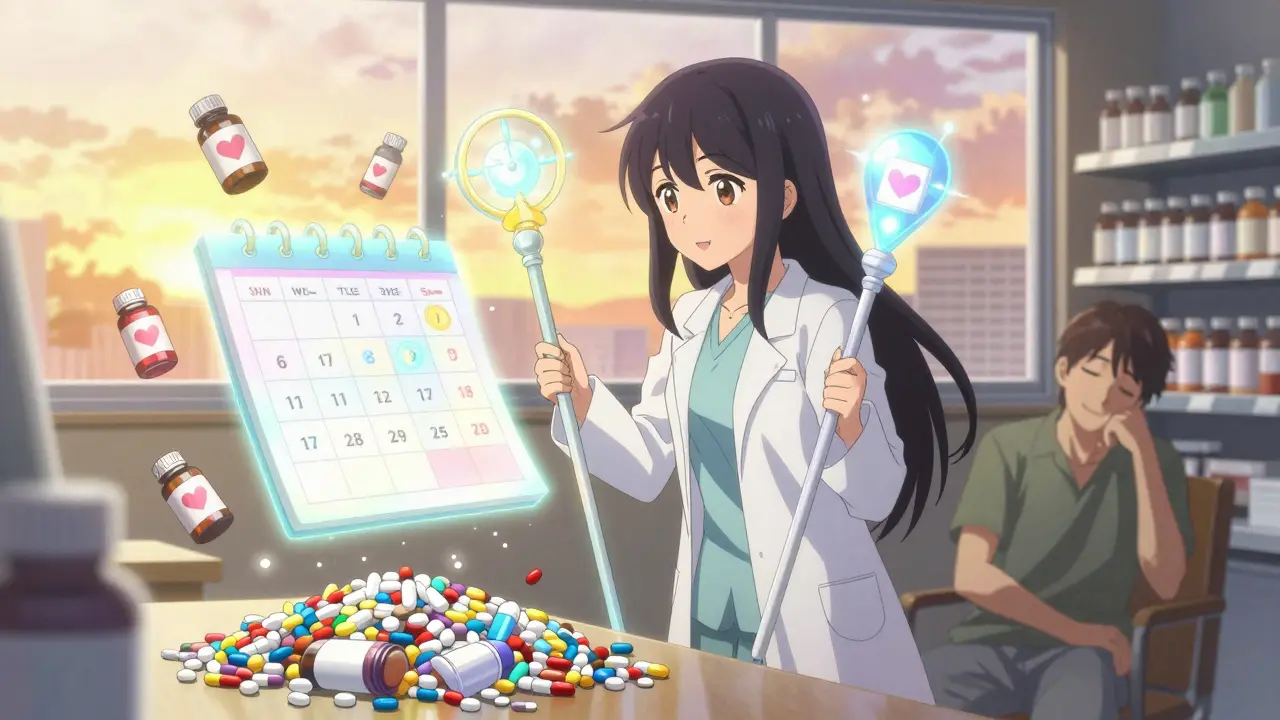
Half of all people with chronic illnesses don’t take their medications like they’re supposed to. Not because they’re careless. Not because they don’t care. But because it’s hard. Too many pills. Too much cost. Confusing schedules. Side effects they don’t understand. And no one asking them if they’re struggling.
That’s where pharmacists come in. Not just the people who hand out pills. Not just the ones who answer questions at the counter. But the ones who sit down, listen, and actually help patients stick to their treatment plans. In 2026, pharmacists are one of the most effective-but still underused-tools we have to fix medication non-adherence.
Why Medication Adherence Matters More Than You Think
When someone skips doses, stops early, or takes the wrong amount, it doesn’t just hurt their health. It costs the U.S. healthcare system about $300 billion every year. That’s more than the annual budgets of 20 states. And it’s not just money. It’s preventable hospital stays. Emergency room visits. Even early deaths.
Take high blood pressure. If patients take their meds consistently, their blood pressure drops by 30-45%. That means fewer strokes, fewer heart attacks. For diabetes, proper adherence cuts hospitalizations by nearly half. For cholesterol-lowering drugs like statins, sticking to the plan reduces heart disease risk by up to 30%.
But here’s the catch: most patients aren’t getting the support they need. Doctors are rushed. Nurses are overloaded. And patients? They’re left figuring it out alone.
What Pharmacists Actually Do to Improve Adherence
Pharmacists don’t just fill prescriptions. They fix them.
When a patient walks in to pick up five different medications, a good pharmacist doesn’t just scan the barcode. They ask: “Do you know why you’re taking each one?” “Do any of them make you feel weird?” “How do you keep track of them?”
Here’s what that looks like in practice:
- Medication reconciliation: After a hospital stay, pharmacists review every drug the patient is taking-checking for duplicates, dangerous interactions, or doses that don’t make sense. This alone reduces readmissions by up to 20%.
- Medication synchronization: Instead of coming in four times a month for different pills, patients get all their refills on the same day. One visit. One conversation. That’s how CVS and Walgreens are helping patients drop from five pharmacy trips a month to just two.
- Cost solutions: A 2023 Reddit post from a patient named u/ChronicCarePatient says it best: “My CVS pharmacist noticed I wasn’t refilling my blood pressure meds. Sat down with me for 20 minutes. Found out the copay was $50. Got me on a free program. My BP’s been stable for 8 months.” That’s not luck. That’s pharmacy.
- Reminders that work: Phone calls. Texts. Voice messages. Pharmacists call patients who haven’t picked up refills-not to nag, but to ask: “Is it the cost? The side effects? The schedule?” Then they adjust.
- Depression screening: One in three patients with chronic illness also struggles with depression. That kills adherence. Pharmacists now use simple two-question screens (PHQ-2) to spot it. If someone’s low, they connect them to care.
These aren’t nice-to-haves. They’re proven. A 2024 study of over 1.2 million patients showed pharmacist-led programs boosted adherence by 4% for diabetes, 6% for high blood pressure, and 6% for cholesterol-while control groups actually got worse.
Why Pharmacists Are Better at This Than Anyone Else
Doctors see patients for 10-15 minutes. Nurses juggle dozens of patients. But pharmacists? They see patients 4-6 times more often than doctors do. That’s the advantage.
Pharmacists are the only healthcare providers who:
- Have direct access to every medication a patient takes
- Can spot a dangerous interaction before it happens
- Know exactly how a pill is supposed to work
- Are trained in motivational interviewing-not just giving orders, but helping patients find their own reasons to stick with treatment
And they’re accessible. Walk into a community pharmacy anytime between 8 a.m. and 8 p.m. No appointment. No wait. Just someone who knows your meds better than you do.
Compare that to digital apps. They’re cheap. They send reminders. But they don’t ask why you missed your dose. They don’t help you find a cheaper alternative. They don’t notice you’re crying when you pick up your antidepressants.
Pharmacists combine tech with humanity. And that’s what works.
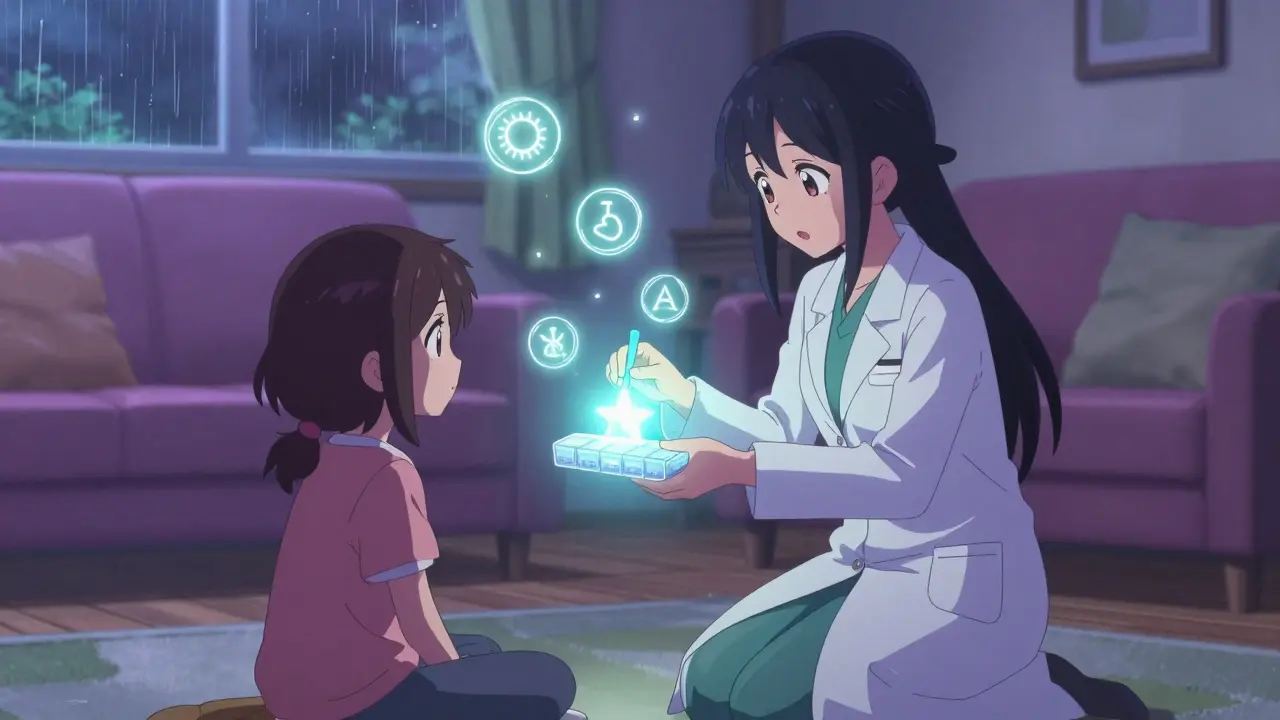
Where It Falls Short-and Why
It’s not perfect.
Some patients feel like they’re being watched. One person left a Trustpilot review: “Pharmacist kept calling about refills but never addressed why I couldn’t afford the medication-just made me feel guilty.” That’s not help. That’s pressure.
And not all programs are created equal. Only 58% of community pharmacies deliver the full intervention as designed. Some just hand out pill organizers. Others do deep counseling. The difference? Results.
Also, cost matters. Pharmacist-led programs cost $125-$175 per patient per year. Digital tools? $25-$50. But here’s the twist: blended programs-phone calls + apps + in-person chats-work 22% better than either alone.
And for patients with severe dementia or cognitive decline? The impact is minimal. Adherence improves by just 4.2% in those cases, compared to 12.7% in people with clear thinking.
Pharmacists aren’t magic. But they’re the closest thing we have.
How Pharmacies Are Making This Work at Scale
Big changes are happening.
Medicare now pays pharmacists directly for adherence services. That’s huge. In 2023, CMS finally updated rules to reimburse for medication therapy management (MTM). Before, most pharmacies lost money doing this. Now, they can afford to.
Pharmacy chains are teaming up with health systems. The National Pharmacist Adherence Collaborative launched in 2024-12 major chains and hospital networks working together to standardize best practices.
And they’re using tech smartly. 67% of pharmacist programs now use app reminders-but only as a tool, not a replacement. The pharmacist still calls. Still listens. Still adjusts.
Even employers are jumping in. 92 of the Fortune 500 companies now include pharmacist adherence support in their employee health plans. Why? Because every $1 spent on these programs saves $7.43 in hospital costs, according to Harvard economist David Cutler.

What’s Next for Pharmacists and Medication Adherence
The future is integration.
Pharmacists will soon be linked directly to EHRs-seeing real-time data on whether a patient filled their script, how often they refill, even their lab results. They’ll get alerts: “Patient hasn’t picked up statin in 60 days. History of heart attack.”
Pharmacy technicians will handle reminder calls. Pharmacists will focus on complex cases: mental health, polypharmacy, low health literacy.
And by 2030, the CDC estimates that if we scale this properly, pharmacist-led adherence programs could prevent 23,000 premature deaths from heart disease every year in the U.S. alone.
But it won’t happen without funding. Only 38% of current programs have stable, long-term payment models. That’s the bottleneck.
What Patients Can Do
If you’re on multiple medications:
- Ask your pharmacist for a full med review. No charge. Just ask.
- Request medication synchronization. Get all your refills on one day.
- Be honest about cost. Say: “I can’t afford this.” They’ll find a way.
- Let them call you. It’s not surveillance. It’s support.
- Bring your pill bottles to your next visit. Don’t just say “I take them.” Show them.
Adherence isn’t about willpower. It’s about systems. And pharmacists are building them-one patient at a time.


Nilesh Khedekar
Pharmacists are the real MVPs of healthcare-yet we treat them like glorified cashiers. I’ve seen my uncle’s pharmacist spend 40 minutes explaining his 12 meds, then call him every week. His BP dropped from 180/110 to 120/75. No doctor did that. Not even close. And now they want to cut funding? Are you serious?
Jami Reynolds
This is all a pharmaceutical industry ploy. The FDA, Big Pharma, and pharmacy chains are colluding to create dependency. Why do you think they pushed for MTM reimbursement? To lock patients into lifelong drug regimens. The real solution? Fasting, herbal tinctures, and avoiding all synthetic compounds.
Nat Young
Let’s be real-4% improvement in diabetes adherence? That’s statistically insignificant. And you’re calling that a win? Meanwhile, the cost per patient is $150. The same money could buy 3000 insulin vials for people who can’t afford them. This isn’t innovation. It’s performative healthcare theater.
Niki Van den Bossche
There’s a metaphysical dimension here, isn’t there? The pill isn’t just a chemical compound-it’s a symbol of our alienation from bodily autonomy. The pharmacist, in their white coat, becomes a priest of pharmacological dogma. They don’t heal-they sacramentalize dependency. And we call this progress? We’ve outsourced our agency to a counter with a barcode scanner and a smile that doesn’t reach the eyes.
ellen adamina
I had a pharmacist notice I was skipping my antidepressants because I felt stupid taking them. She didn’t lecture me. She just said, 'I’ve been there too.' Then she gave me a number for a free counseling group. That’s the kind of care we need more of.
Tom Doan
Funny how we glorify pharmacists now. Ten years ago, they were the people who scolded you for not picking up your script. Now they’re healthcare heroes? I guess when you’re desperate enough, even the guy who hands you your statin becomes a savior.
Annie Choi
This is the future of care. Pharmacists are the frontline. They’re the ones who catch the interactions, the cost barriers, the silent depression. We need to fund this like it’s a public health emergency-because it is. Let’s make MTM mandatory in every state. No more excuses.
Ayush Pareek
In India, we don’t have this luxury. My aunt takes 7 pills a day. She forgets half. Her local pharmacist? He writes the schedule on a torn piece of paper, ties it to her medicine box, and calls her every Sunday. No tech. No apps. Just care. We need more of that.
Nicholas Urmaza
If you think pharmacists are the solution you’re missing the point. The problem is systemic. Drug prices are insane. Insurance is broken. No amount of counseling will fix that. Stop putting the burden on the pharmacist and fix the system
Sarah Mailloux
My pharmacist texted me when I didn’t pick up my blood thinner. I was embarrassed. But she didn’t judge. She asked if I needed help. That’s all I needed. Not a lecture. Not a form. Just someone who noticed.
Jan Hess
I’ve worked in pharmacies for 15 years. The ones doing real work? They’re exhausted. Underpaid. Overworked. We’re not magic. We’re just the last people standing between patients and disaster. If we don’t get better pay and staffing, this whole system collapses.
Iona Jane
They’re watching you. Every refill. Every call. Every text. This isn’t care-it’s surveillance. They’re building a database of your vulnerabilities. Next thing you know, your insurance will raise your rates because you ‘missed doses.’ Don’t be fooled. This is control dressed up as compassion.
Jaspreet Kaur Chana
In my village back home, the pharmacist is the first person you talk to when you’re sick. He knows your whole family’s meds. He remembers your kid’s asthma attack last year. He’ll walk to your house if you’re too weak to come in. We don’t need fancy apps. We need people who care enough to show up. That’s what pharmacy means where I’m from.
Haley Graves
Stop romanticizing pharmacists. They’re employees. They follow protocols. They’re not therapists. They’re not social workers. If you want real change, fix the insurance system, cap drug prices, and stop making patients choose between food and their meds.
Diane Hendriks
The assertion that pharmacists are ‘the closest thing we have’ to solving non-adherence is empirically flawed. The data cited is correlational, not causal. Moreover, the $300 billion cost figure includes avoidable hospitalizations due to system-wide inefficiencies, not merely medication non-adherence. This narrative is dangerously reductive.