
Why You Should Check Your Medicine Cabinet Right Now
Most people don’t think about their medicine cabinet until they need something-and by then, it’s often too late. You grab a bottle of painkillers, only to notice the date has faded. Or you find an old antibiotic from last year’s cold, still sitting there like it might help again. But here’s the truth: expired medicine doesn’t just lose its power-it can become dangerous.
The FDA warns that expired drugs may change in chemical makeup, lose strength, or even break down into harmful substances. Tetracycline, for example, can turn toxic after expiration. Insulin, epinephrine, and liquid antibiotics lose effectiveness fast, putting lives at risk in emergencies. And if you’ve got kids or grandkids around, an unattended bottle of pills could be a poison risk. In 2022 alone, over 67,000 children were treated for accidental medication exposure from home cabinets, according to the American Association of Poison Control Centers.
What to Remove: The Immediate Red Flags
Don’t wait for the expiration date to pass. Some medicines need to go before then. Here’s what to toss right away:
- Any pill, capsule, or liquid that’s changed color-especially if it’s faded, yellowed, or cloudy.
- Medicines that smell weird or taste off. If it doesn’t smell or taste like it used to, it’s not safe.
- Insulin, nitroglycerin, liquid antibiotics, or injectables-even if they’re within the printed date. These degrade quickly and can fail when you need them most.
- Unlabeled containers. If you can’t tell what’s inside, throw it out. No exceptions.
- Prescriptions older than one year. The National Kidney Foundation recommends discarding any prescription drug after 365 days, regardless of the expiration date on the bottle. That’s because once a bottle’s opened, the medicine begins to break down faster.
Where You Store Medicine Matters More Than You Think
Storing your meds in the bathroom? That’s a problem. Humidity from showers can wreck pills and liquids. A 2022 study from Yale New Haven Health found that bathroom storage cuts medication potency by 15-25% in just six months. That means your pain reliever might only be giving you 75% of the dose it should.
Instead, move everything to a cool, dry place. A kitchen cabinet away from the stove or sink works best. Avoid windows-sunlight degrades drugs too. The ideal spot is between 68°F and 77°F, out of reach of kids and pets. If you live in a humid climate, consider a sealed plastic container with a silica gel packet to absorb moisture.
Your Six-Step Medicine Cabinet Cleanup Checklist
Follow this simple process twice a year-spring and fall, when you change your clocks. It takes less than 30 minutes, and it could save a life.
- Empty everything out. Take every bottle, tube, packet, and box off the shelf. Lay them on the counter. No shortcuts.
- Check every expiration date. Look at prescriptions, over-the-counter meds, vitamins, and even topical creams. Don’t skip the eye drops or nasal sprays-they expire too.
- Discard the bad stuff. Put expired, discolored, or unlabeled items in a separate pile. If it looks off, toss it.
- Dispose safely. Don’t flush pills or throw them in the trash raw. The FDA’s best method: mix pills with something unappetizing like used coffee grounds or cat litter (at least two parts filler to one part medicine). Seal it in a plastic bag or container. Scratch out your name and prescription info on the bottle before trashing it. For needles or sharps, use a rigid plastic container like a 2-liter soda bottle with the cap taped shut.
- Restock essentials. Keep these items on hand: adhesive bandages (20+), gauze pads (10+), medical tape, digital thermometer, alcohol wipes (10+), hydrogen peroxide, petroleum jelly, scissors, and tweezers. NorthShore University HealthSystem says these cover 90% of minor home emergencies.
- Set a reminder. Link your next check to daylight saving time. It’s easy to remember, and 92% of pharmacists recommend this method. Set a calendar alert if you need to.
What Happens If You Don’t Clean Out Your Cabinet?
It’s not just about wasted pills. Leaving expired or unused drugs lying around creates real dangers.
First, antibiotic resistance is growing. When people take expired antibiotics, they don’t get a full dose. That’s not enough to kill the infection-but it’s enough to train bacteria to fight back. Hospital data shows a 12-15% rise in resistant infections tied to home use of expired antibiotics.
Second, opioid misuse starts at home. The CDC reports that 70% of misused prescription opioids come from medicine cabinets. Teens and visitors often find them-sometimes by accident, sometimes not. A 2022 Scripps Health survey found older adults are 37% more likely to grab the wrong pill in a cluttered cabinet, risking deadly interactions.
Third, kids get into them. Brightly colored pills, sweet-tasting syrups, and oddly shaped capsules look like candy. Poison control centers get thousands of calls every year because a child found a bottle they shouldn’t have.
How to Dispose of Medicine the Right Way
There’s a better way than tossing pills in the trash.
The best option? Drug take-back programs. The DEA runs National Prescription Drug Take Back Day twice a year, and there are over 14,600 permanent collection sites across the U.S. as of early 2024. You can find one near you at dea.gov/takeback. Most pharmacies, hospitals, and police stations participate.
If that’s not convenient, new mail-back options are available. CVS, Walgreens, and other major pharmacies now offer free prepaid envelopes for returning unused meds. Just drop your pills in, seal it, and mail it. No stamp needed.
And if you’re stuck with no options? Follow the FDA’s home disposal method: mix with coffee grounds or cat litter, seal tightly, and throw it away. Never flush unless the label says to-most drugs shouldn’t go down the drain.
What to Keep: The Essentials for Every Medicine Cabinet
Once you’ve cleared out the junk, rebuild with purpose. Here’s what you actually need:
- Adhesive bandages (assorted sizes)
- Gauze pads and medical tape
- Digital thermometer (no mercury)
- Alcohol wipes and hydrogen peroxide
- Petroleum jelly (for dry skin or minor burns)
- Scissors and tweezers
- Antihistamine (like loratadine)
- Pain reliever (acetaminophen or ibuprofen)
- Anti-diarrheal (like loperamide)
- Hydration packets (electrolyte powder)
Don’t overstock. Buy small quantities. Expired items still pile up if you hoard. Replace as you use them.
What’s Next: Smarter Medicine Storage
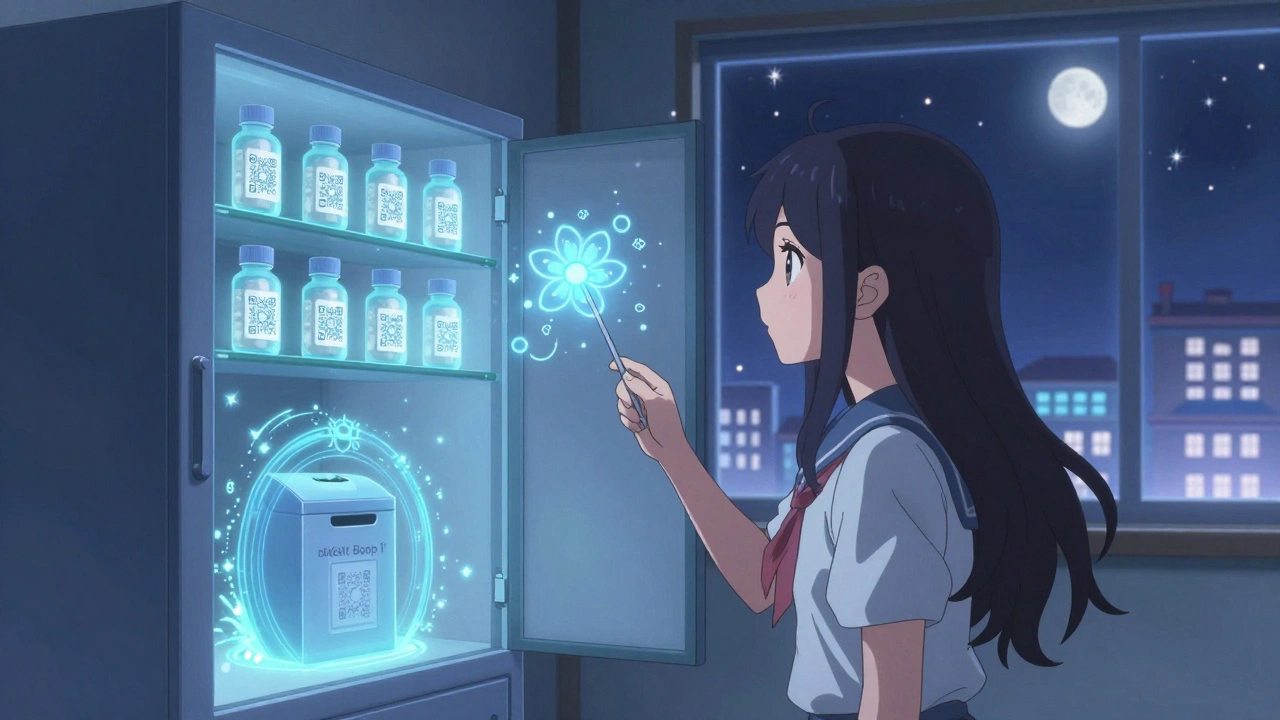
Technology is catching up. In 2024, Yale New Haven Health started testing QR code labels on medicine bottles. Scan the code with your phone, and it shows the expiration date, dosage, and warnings. In a pilot with 1,200 households, adherence to safe disposal jumped 89%.
By 2025, smart medicine cabinets are coming. Amazon and Google are developing inserts with humidity sensors that alert you if your meds are getting too damp. These will connect to your phone and remind you when it’s time to check your cabinet.
For now, the simplest tool is still the best: a calendar reminder and a few minutes twice a year. You don’t need fancy gadgets to stay safe. You just need to look.
What If You’re Not Sure?
If you’re unsure whether a medicine is still good, don’t guess. Call your pharmacist. They can tell you if it’s safe based on the drug type, storage history, and condition. Most will even help you dispose of it properly.
And if you’ve got a lot of old meds, or if someone in your home is on multiple prescriptions, consider a medication review with your doctor. They can help you cut the clutter and keep only what’s necessary.

Michelle Edwards
I did this last spring and honestly? Life changed. I found three expired painkillers I didn't even remember buying, plus that old antibiotic from my dog's vet visit in 2021. Threw it all out. Felt so much lighter. You don't need to be a health expert to do this-just a little courage and a trash bag.
Raj Rsvpraj
You Americans are so dramatic about medicine... In India, we use expired drugs all the time-what, you think your body can't handle a little degradation? We have more wisdom than your FDA propaganda. Also, why are you storing pills in the kitchen? In my village, we keep them in the sun-kills bacteria!
Aileen Ferris
i did the check but like... found a bottle of tylenol that was expired in 2020? still looked fine. so i kept it. also why are we listening to the fda? they also said aspartame was fine until they said it wasnt. and then they said it was fine again. who even knows anymore??
Nikki Smellie
This is all a distraction. The real issue? The pharmaceutical industry is pushing expiration dates to make you buy more. They know if you used your meds for 3 years, they'd lose billions. The FDA? Controlled by Big Pharma. And those 'take-back' programs? They just incinerate them-so the toxins go into the air. You're being manipulated. Check the QR codes? That's a tracking feature. Don't scan anything.
Neelam Kumari
Wow. So you're telling me I should throw out my grandfather's heart medicine because the date faded? He's 87 and still takes it every day. He's alive. Your 'science' is just fear marketing. You're the reason people don't trust doctors anymore. Pathetic.
Queenie Chan
I once found a bottle of cough syrup from 2017 that had crystallized into a tiny, glittery desert inside the cap. It looked like a cursed artifact. I held it up to the light and whispered, 'What have you become?' Then I tossed it into the compost. It felt like a ritual. Some medicines don't expire-they transform.
Ben Greening
Solid advice. I've been doing this biannually since my mom had a bad reaction to an old antihistamine. The bathroom storage point is critical-I had a bottle of amoxicillin that turned into a sludgey mess after six months in there. Kitchen cabinet, sealed container, silica gel: game changer.
Stephanie Maillet
It's interesting how we treat medicine like a relic of the past-something to hoard, to preserve, to cling to. But it's not a keepsake. It's a tool. And tools wear out. Maybe the deeper lesson here isn't about expiration dates... but about letting go. Of fear. Of control. Of the illusion that we can store safety in a plastic bottle forever.
Jack Appleby
You missed the most critical point: the FDA's expiration dates are legally mandated to be conservative-often 10-15 years beyond actual stability. A 2012 DoD study showed 90% of stockpiled meds were still potent 15+ years past expiry. You're being sold fear to fuel consumerism. Also, cat litter? That's a biohazard disposal method for amateurs. Use activated charcoal. Or better yet-don't touch it. Call a pharmacist. You're not qualified.
Rebecca Dong
I JUST FOUND OUT MY DOCTOR'S OFFICE HAS BEEN GIVING ME EXPIRED VACCINES FOR YEARS. I SAW THE LABEL. I'M SICK. I'M GOING TO THE NEWS. I'M TELLING EVERYONE. THIS IS A COVER-UP. THEY'RE DOING IT TO SAVE MONEY. I'VE BEEN WEAK SINCE 2022. I KNOW IT. I KNOW IT.
Sarah Clifford
i threw out all my meds last week. now i just take whatever my grandma gives me. she says if it's not killing me, it's working. also i put my ibuprofen in the glovebox of my car. it's always warm but hey, it's still there!
Regan Mears
I appreciate the practical steps. My mom had a stroke last year and we found three different blood pressure pills in her cabinet-two expired, one unlabeled. We called the pharmacist. They came to our house and took them. No judgment. Just help. That’s the kind of care we need more of.
David Palmer
I read this whole thing and now I feel guilty. Like I'm a terrible person for not doing this. I didn't even know my eye drops expired in 2020. I've been using them. I'm crying. I'm so sorry. I'm going to throw everything out. I'm going to cry harder. I'm going to buy new ones. I'm going to feel better. Then I'll forget again. This is my life.